
Cangshan Mountain and Erhai Lake: The Scenery I Grew Up With
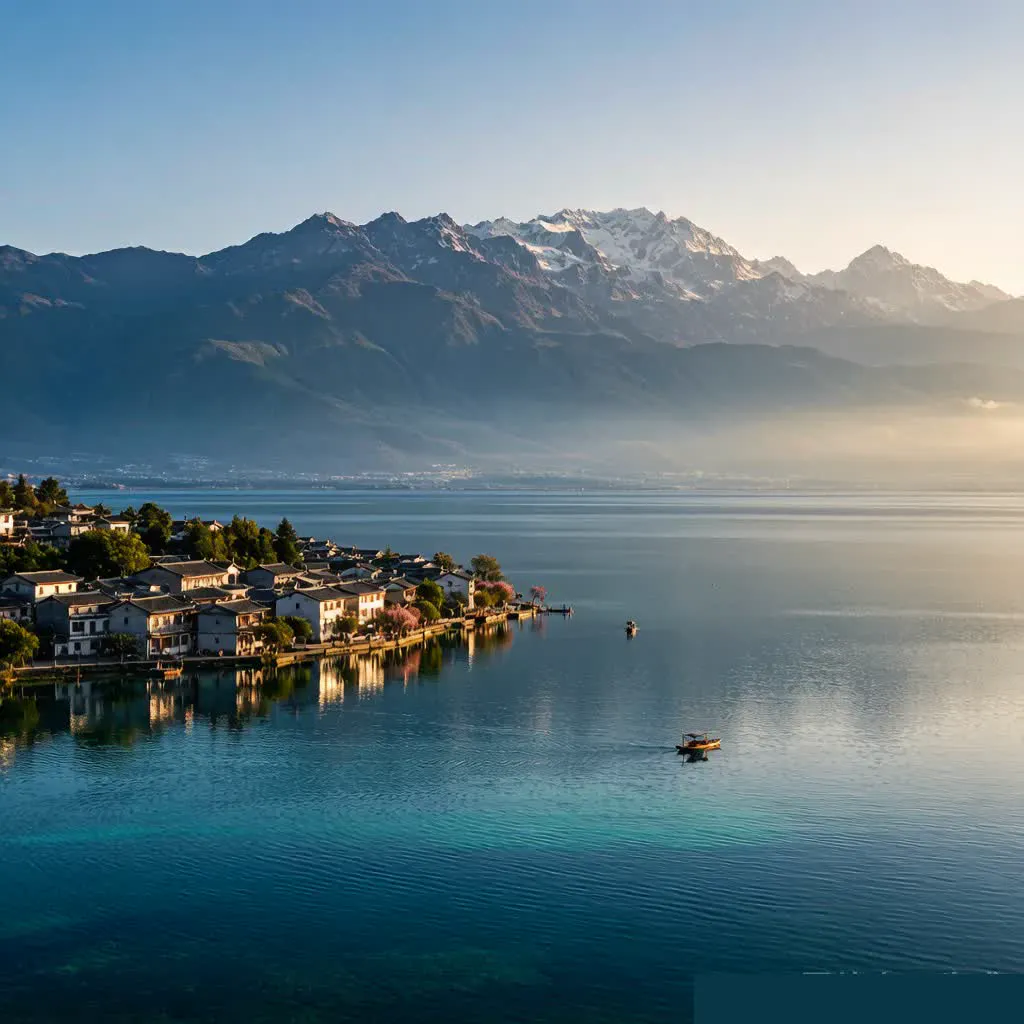
Cangshan Mountain lies to the west of Dali City, and Erhai Lake lies to the east, forming the famous “Wind, Flower, Snow, Moon” landscape of “Cangshan snow and Erhai moon.”
Cangshan has nineteen peaks and eighteen streams, with the highest peak, Malong Peak, at 4,122 meters above sea level. Erhai Lake is China’s seventh-largest freshwater lake, covering about 250 square kilometers.
I grew up looking at Cangshan Mountain and Erhai Lake. In the morning, the snow on Cangshan glitters in the sunlight; in the evening, the moon over Erhai is reflected in the water. That beauty is carved into my bones.
The snow on Cangshan never melts all year round, and the moon over Erhai is mirrored in the lake. The wind of Xiaguan, the flowers of Shangguan, the snow of Cangshan, and the moon of Erhai together make up “Wind, Flower, Snow, Moon”—the synonym for Dali and the inspiration for the Bai girls’ headdress.
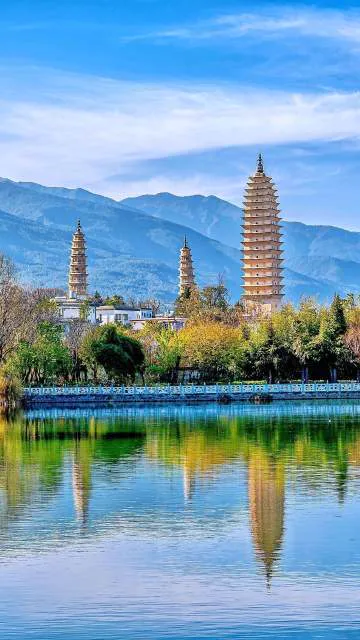
Dali Ancient City: Capital of the Nanzhao and Dali Kingdoms
Dali Ancient City lies at the foot of Cangshan Mountain and on the shore of Erhai Lake. It was first built during the Nanzhao period of the Tang Dynasty, originally the Nanzhao capital of Yangjumie City.
In 1982, it was listed among China’s first batch of National Historical and Cultural Cities. Inside the ancient city are Wuhua Tower, Foreigners’ Street, Fuxing Road, and more, with well-preserved city walls and gates.
Walking along the bluestone streets of the ancient city, both sides are Bai residences turned into shops, selling tie-dye, silver jewelry, and milk fan. The ancient city is not large, but every stone has a story.
Every time I take friends around the ancient city, I say: don’t be fooled by how lively this ancient city looks now—more than a thousand years ago, this was the capital of the Nanzhao Kingdom, the center of the entire southwest.
Xizhou Ancient Town: A Museum of Bai Residences
Xizhou Ancient Town lies on the northwest shore of Erhai Lake, on the road north from Dali City, and has been a Bai settlement since ancient times.
The Xizhou building complex is a typical Bai residence, characterized by “three rooms and a screen wall, four courtyards and five patios.” In 2001, it was listed as a National Key Cultural Relics Protection Unit.
Xizhou baba and Xizhou crispy baba are local famous foods. Visiting Xizhou without eating baba and seeing the residences means you haven’t really been here.
Every time I return to Xizhou, I walk through the old houses. Those three-room-and-screen-wall houses, those carved wooden gate towers, those “Fu” (fortune) characters on the screen walls—they are all memories of my childhood.
Xinhua Village: Home of Chinese Silverwork
Xinhua Village, in Dali Prefecture, is a famous Bai silver-making village, known as the “Home of Chinese Silverwork.”
Every household in the village works in silver processing, from melting silver, forging, chasing, and engraving to polishing—all done entirely by hand.
Yunsilver is located in Dali. The silversmiths here learn the craft from childhood, mastering chasing, forging, and inlaying. Every piece of 999 handmade fine silver comes out of Dali.
I often tell my friends: the silversmiths of Xinhua Village are the best silversmiths in China. Not because their technique is the best, but because they put in the most care. Every piece of silver jewelry is made with a lifetime of craftsmanship.
Dali Bai Autonomous Prefecture: The Map of My Hometown
Dali Bai Autonomous Prefecture governs Dali City, eight counties including Xiangyun, Binchuan, Midu, Yongping, Yunlong, Eryuan, Jianchuan, and Heqing, and three ethnic autonomous counties: Yangbi, Weishan, and Nanjian.
Each county has its own character: Jianchuan’s wood and stone carving, Dali’s silverwork, Xizhou’s residences, Zhoucheng’s tie-dye.
Erhai Ecological Corridor and Shuanglang
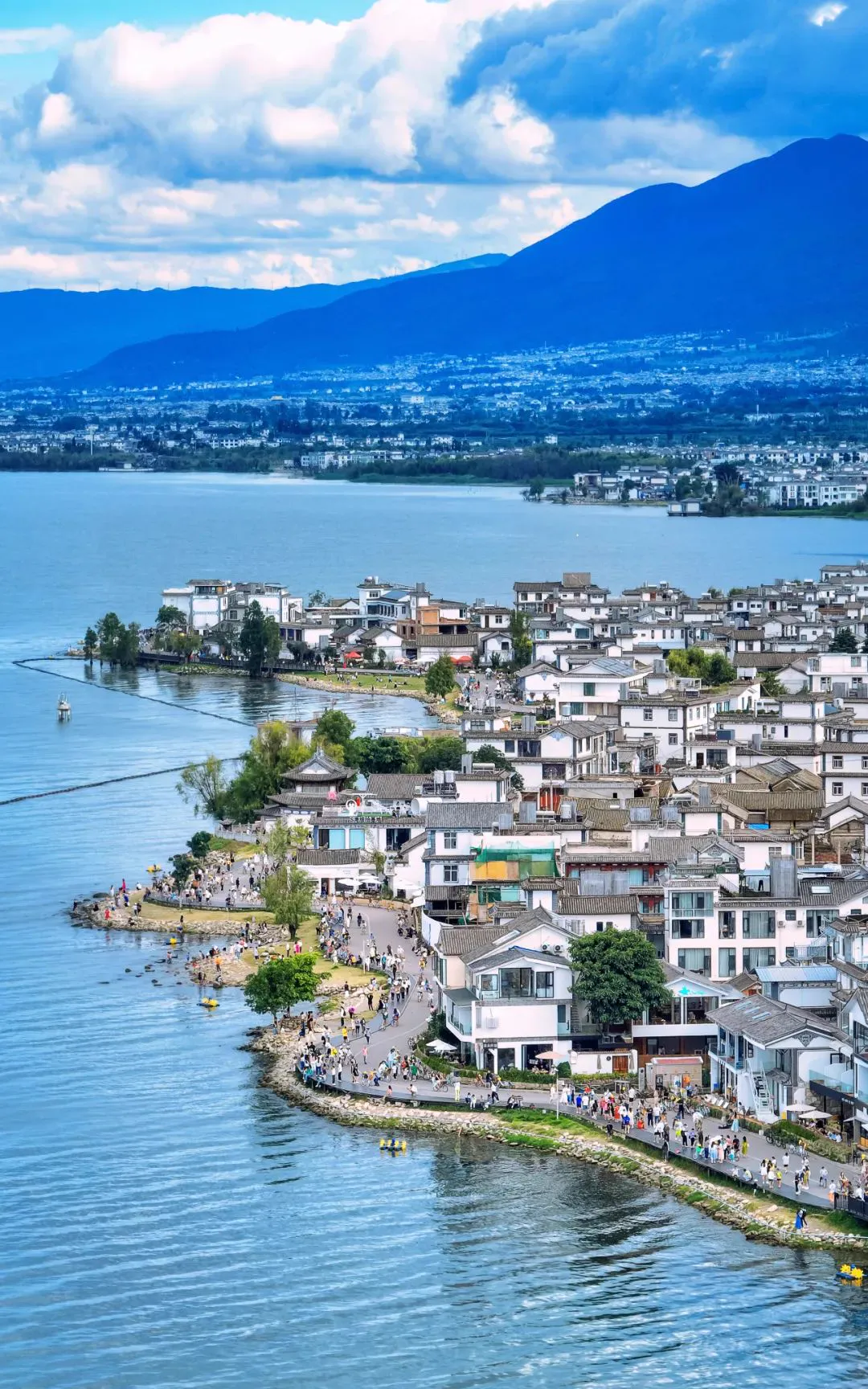
The Erhai Ecological Corridor stretches about 129 kilometers around the lake. Cycling along it, you pass Caicun Pier, the S-curve of Panxi Village, Little Putuo, Shuanglang Ancient Town, and other scenic spots.
In the middle section of the western corridor are lesser-known attractions like Shuangyuan Creek Wetland, Haishen Park, and Gusheng Village.
Shuanglang Ancient Town lies on the eastern shore of Erhai Lake, famed as “the beauty of Dali lies in Cangshan and Erhai, and the beauty of Cangshan and Erhai lies in Shuanglang.” Yang Liping’s Sun Palace and Moon Palace are located in Shuanglang.
Climate and Best Time to Visit
Dali has a low-latitude highland monsoon climate, with spring all year round.
The best times to visit are March to May (rapeseed flower and cherry blossom seasons) and September to November (crisp autumn air, golden season for photography).
No matter when you come to Dali, Cangshan Mountain and Erhai Lake will be there, Bai villages will be there, and the sound of silversmiths’ hammers will be there too.
My home will always be waiting for you in Dali.
I am Mr. Jiang, founder of Yunsilver. My home is in Dali. The silver jewelry I make tells the stories of the Bai people. Website: yunsilver.com
Leave a Reply