The short answer: 925 sterling silver (92.5% silver) is the international standard for mass-produced jewelry — durable, affordable, and easy to verify. But 999 fine silver (99.9% pure), worked entirely by hand, is a different craft altogether: softer metal demanding higher skill, producing pieces with a depth and warmth that casting cannot replicate. The choice is not about which is “better” — it is about what you are making.
If you source silver jewelry or silverwork, understanding both standards — and when each makes sense — protects you from mislabeled products and helps you match the right material to the right piece.
What 925 Sterling Silver Is
925 sterling is an alloy: 92.5% pure silver, 7.5% other metals (usually copper). The copper hardens the alloy, making it durable for mass-produced, daily-wear jewelry — the international standard for volume production.
What 999 Fine Silver Is — And Why It Demands Handwork
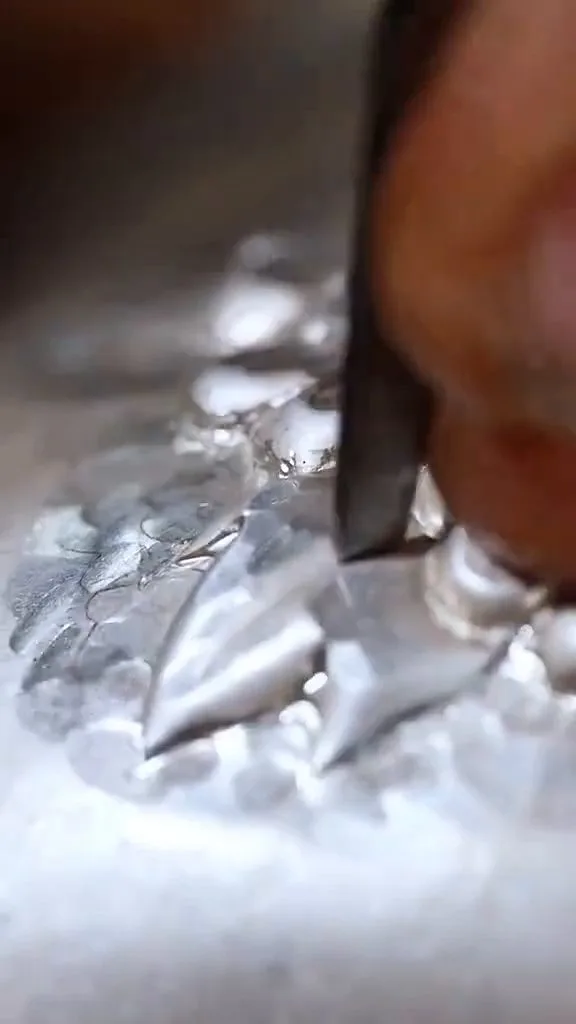
999 fine silver is 99.9% pure. It is softer, warmer in tone, and — crucially — cannot be treated like 925. Machine stamping and high-speed casting lines are built for harder alloys; 999 requires the silversmith’s hands at every step: hand-forging to work-harden specific areas, careful annealing between stages, and finishing techniques that respect the metal’s softness rather than fighting it.
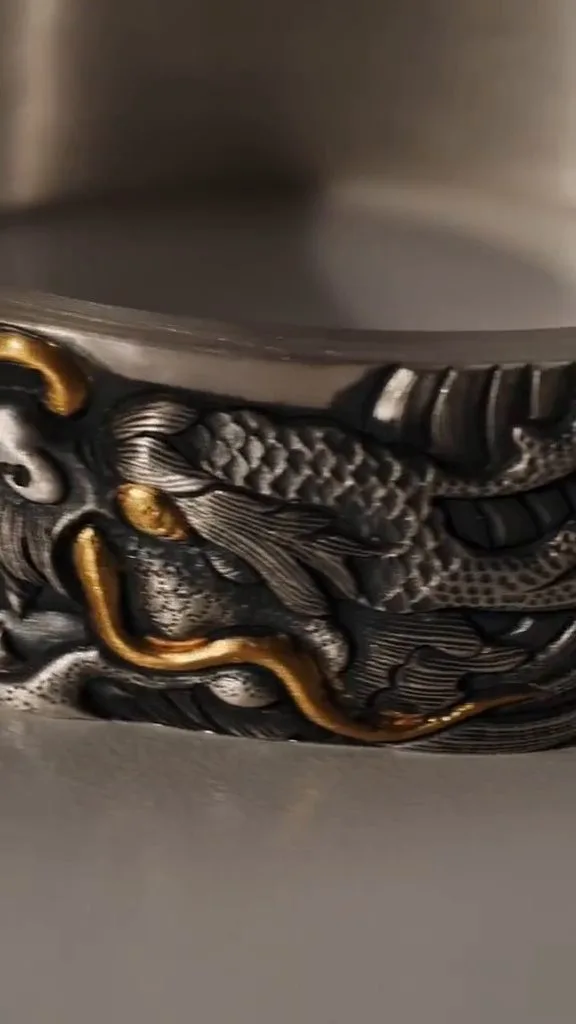
This is not a limitation. It is the craft. A hand-forged 999 bangle carries the hammer marks of its making — each strike slightly work-hardens the surface while leaving the interior soft and warm to the touch. The result is a piece with a depth of texture that no casting mold can produce.
This is Yunsilver’s core specialty. Our Dali workshop produces 999 handmade fine silver as its signature line — not because it is easier, but because the craft tradition of Yunnan silversmithing was built on pure silver, and the market for genuine handmade pieces recognizes the difference.
When to Choose Which
| 925 Sterling | 999 Fine Silver (Handmade) | |
|---|---|---|
| Best for | Daily-wear jewelry, mass production | Artisan pieces, collectibles, cultural silverwork |
| Durability | High | Moderate |
| Craft method | Casting, stamping, machine-assisted | Hand-forging, hand-chasing, repoussé |
| Price | Lower | Higher |
| Buyer | Fashion brands, volume retailers | Collectors, cultural buyers, premium gift market |
The honest guidance: specify 925 for high-wear, high-volume jewelry. Specify 999 handmade when the piece itself is the statement — where the buyer’s hand will feel the difference that only handwork in pure silver can produce.
First-Hand Evidence: How We Work 999
In our workshop, 999 silver arrives as grain and leaves as finished pieces without ever touching a casting machine. The critical skill is knowing where to work-harden and where to leave soft: a bangle’s outer surface gets hundreds of hammer strikes for strength and texture, while the inner surface stays smooth against the skin.
Verification is straightforward but strict. Finished 999 pieces are tested with XRF (X-ray fluorescence), which reads elemental composition without damage. We stamp “999” only after the piece passes.
One thing buyers should know: genuine handmade 999 carries subtle irregularities — slight asymmetry in hand-chased patterns, faint hammer texture under the polish. These are not defects. They are the signature of the hand, and they are exactly what distinguishes our pieces from machine-made “999” claims that deserve skepticism.
Hallmarks and What They Mean
Genuine 999 carries a “999” or “足银” stamp. Genuine 925 carries “925” or “STERLING.” In both cases, the absence of any mark on a piece sold under that standard is a red flag.
For 999 specifically, ask an additional question: was this handmade or cast? A cast “999” piece is technically fine silver but misses the entire point — the value of 999 is in the handwork it requires and the texture only hands can produce. If a supplier cannot show you the workshop or explain their hand process, the 999 claim deserves scrutiny regardless of what the stamp says.
FAQ
Is 999 fine silver real silver?
Yes — 99.9% pure, the highest practical purity for crafted silverwork and jewelry. It is softer than 925, which is why it demands handwork.
Does 999 tarnish faster than 925?
Actually, 999 tarnishes more slowly — tarnish comes primarily from copper reacting with sulfur compounds, and 999 has almost no copper. Another quiet advantage of fine silver.
Can 999 jewelry be worn daily?
Depends on the piece. Bangles, pendants, and earrings in 999 are fine for regular wear. Rings with thin bands or pieces with mechanical clasps are better in 925 — daily stress points need the harder alloy.
How do I verify a supplier’s 999 handmade claim?
Three checks: (1) XRF test reports on finished pieces; (2) ask to see the workshop — hand-forging leaves evidence (hammers, anvils, chasing tools) that a casting-only shop cannot fake; (3) look for the subtle irregularities of handwork in the finished piece. Machine-perfect “handmade” is a contradiction.
Why does handmade 999 cost more?
Labor. A single hand-chased bangle can take a skilled silversmith days. You are paying for the hand, the eye, and the years of training behind them — not just the metal.
Leave a Reply