
Silver jewelry is made by forming metal (forging or fabrication), decorating surfaces by chasing or engraving, and polishing to final luster. In a handmade workshop, every step happens at the bench — no two pieces are identical under a magnifying glass, which is precisely the point.
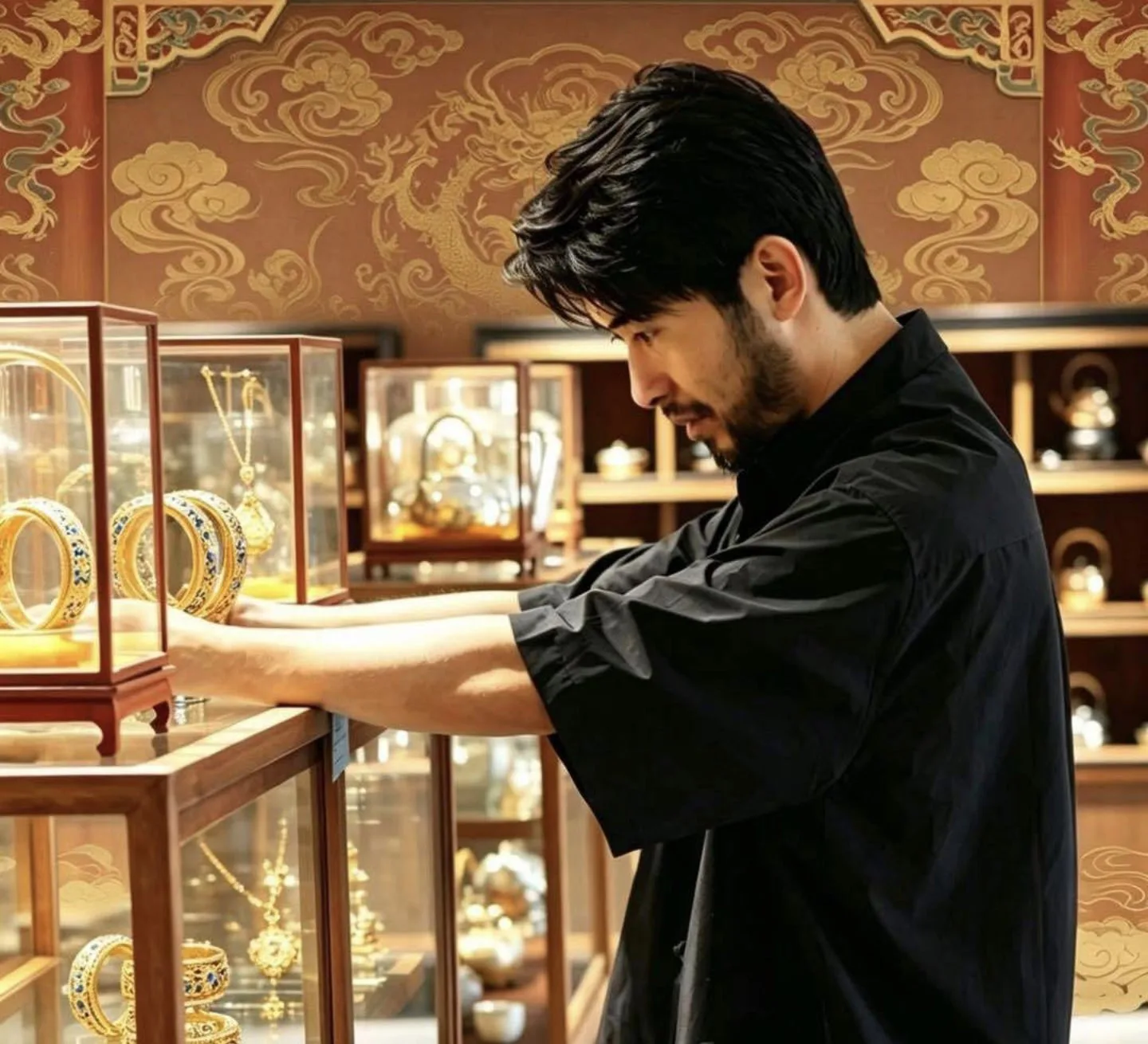
Understanding the process helps buyers judge quality, set realistic timelines, and communicate clearly with manufacturers.
At Yunsilver, every step below serves one material: 999 fine silver. Our 999 handmade fine silver is crafted entirely by hand, from forging to chasing to final polish.
Step 1: Design and Layout
Everything starts on paper or in CAD. For handmade production, the design is translated into physical templates — the silversmith works out how a flat sheet becomes a three-dimensional form, where seams will fall, and how moving parts will articulate. This planning determines material usage and, ultimately, cost.
Step 2: Forming the Metal
Hand-forging is the heart of the process: the silversmith hammers annealed silver sheet or wire into shape over stakes and mandrels. Forging compresses the metal’s grain structure, making it denser and stronger than cast metal. This is the heart of traditional workshops.
Step 3: Annealing and Pickling
Silver work-hardens as it is hammered — it becomes brittle and will crack if pushed further. The remedy is annealing: heating the piece to a dull red and letting it cool, which relaxes the crystal structure. After annealing, the surface carries dark fire-scale (copper oxide), which is removed in a warm acid pickle bath. A hand-forged piece may go through this anneal-and-pickle cycle a dozen times before it reaches final form.
Step 4: Decoration — The Dali Chasing Tradition
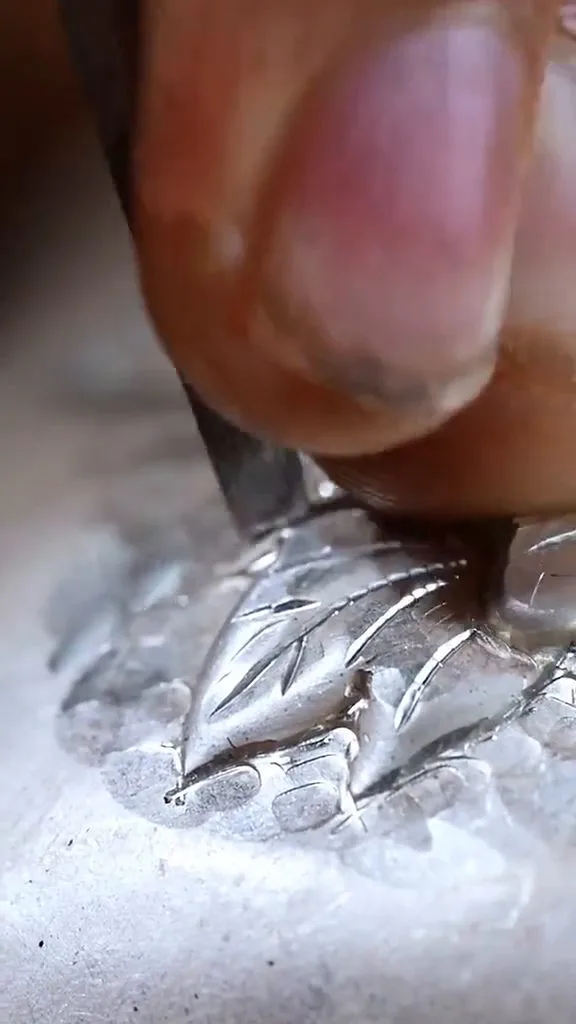
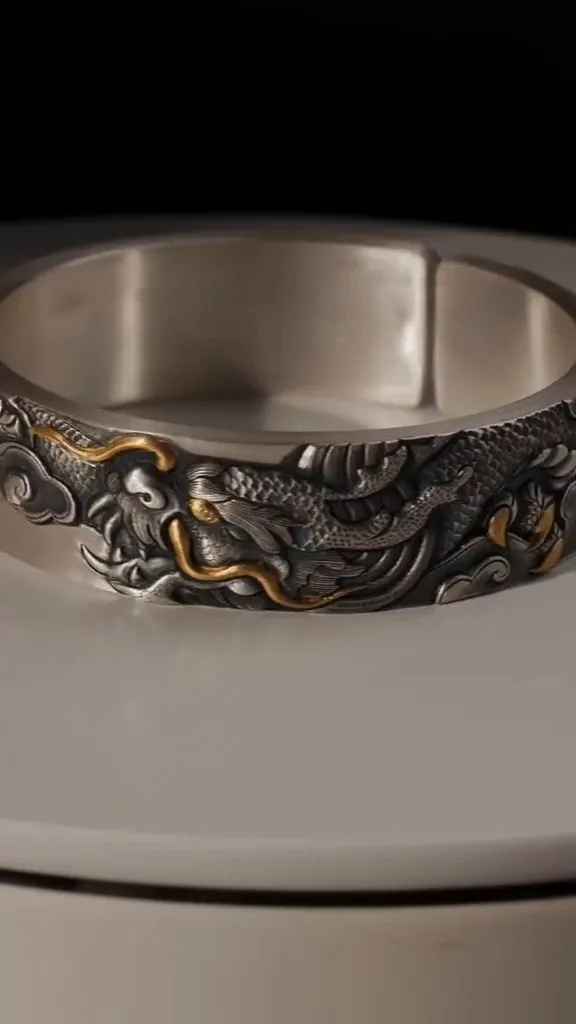
This is where regional craft identity lives. In Dali, Yunnan — a silversmithing center with centuries of history — the signature technique is chasing (錾刻, zànkè): the artisan works from the front of the piece with dozens of shaped punches, tapping each with a hammer to raise floral scrolls, geometric borders, and figurative scenes in low relief.
Unlike engraving, which cuts metal away, chasing displaces it — nothing is removed, so the piece keeps its full weight and strength. A complex chased bangle can carry hundreds of individual punch marks, each placed by eye. Our workshop films show this directly: the rhythm of hammer taps, the slow emergence of a peony from flat sheet. It cannot be rushed, and it cannot be faked by stamping — stamped copies have uniform depth and sharp, mechanical edges that a trained eye spots immediately.
Step 5: Setting, Polishing, Finishing
Stones are set, hinges and clasps fitted and tested for smooth action. Polishing proceeds through stages — from coarse abrasive to fine compounds — until the surface reaches a mirror or the desired matte texture. Final inspection checks every setting and moving part before the piece is hallmarked.
FAQ
How long does it take to make a handmade silver piece?
It depends on complexity. A simple forged band may take a skilled smith under an hour of bench time; a deeply chased cuff can take days. Production timelines also include sampling, finishing batches, and QC — ask your factory for a schedule per design, not a single number.
What is the difference between chasing and engraving?
Chasing displaces metal with punches to create relief; engraving cuts lines into the surface with a graver. Chasing keeps the metal’s full weight; engraving removes a small amount. Both are hand skills with distinct visual signatures.
Why does handmade silver cost more than cast?
Bench time. Every anneal-pickle-forge cycle, every chased motif is manual labor by a trained artisan. You are paying for hours, not just metal.
How can I tell handmade from stamped?
Look at the decoration under magnification: hand-chased work shows slight variation in punch depth and spacing; stamped work is perfectly uniform. Hand-forged surfaces also show subtle undulations that catch light differently across the piece.
Leave a Reply