
My Hometown, Home to a People Called the Bai
I often tell my friends that my hometown, Dali, is home to a gentle and resilient people—the Bai.
The Bai are China’s 14th largest ethnic group. In the 2020 census, there were 2.09 million Bai people across China, of whom 1.56 million live in Yunnan—more than 80 percent. The rest are scattered in Guizhou, Hunan, and elsewhere, but their roots are all by Erhai Lake.
We Bai call ourselves “Baihuo,” “Baizi,” and “Baini.” In historical records, we were once called “Baiman” and “Bairen,” and after the Ming Dynasty, “Minjia.” The character “Bai” (white) comes from the Baizi Kingdom of the Jin Dynasty—our first political regime, which lasted more than 400 years through 17 kings.
In our language, “Bai” means noble, pure, and clean. We love white clothing, live in white-walled houses, and our hearts are white as well.
4,000 Years Ago, My Ancestors Already Lived by Erhai Lake
Do you know that 4,000 years ago, my ancestors were already living by Erhai Lake?
There is a cave site on Malong Peak of Cangshan Mountain, called the Malong site, home to the Malong people. These are the oldest Bai ancestors that archaeology has found. We call them the “Erhai people.”
The Erhai people include the Malong people of Cangshan, the Baiyang people of Binchuan, the Dabona people of Xiangyun, and the Haikou people of Jianchuan. They created Yunnan’s earliest bronze civilization, fishing, farming, and making pottery by Erhai Lake, passing their way of life down through generations.
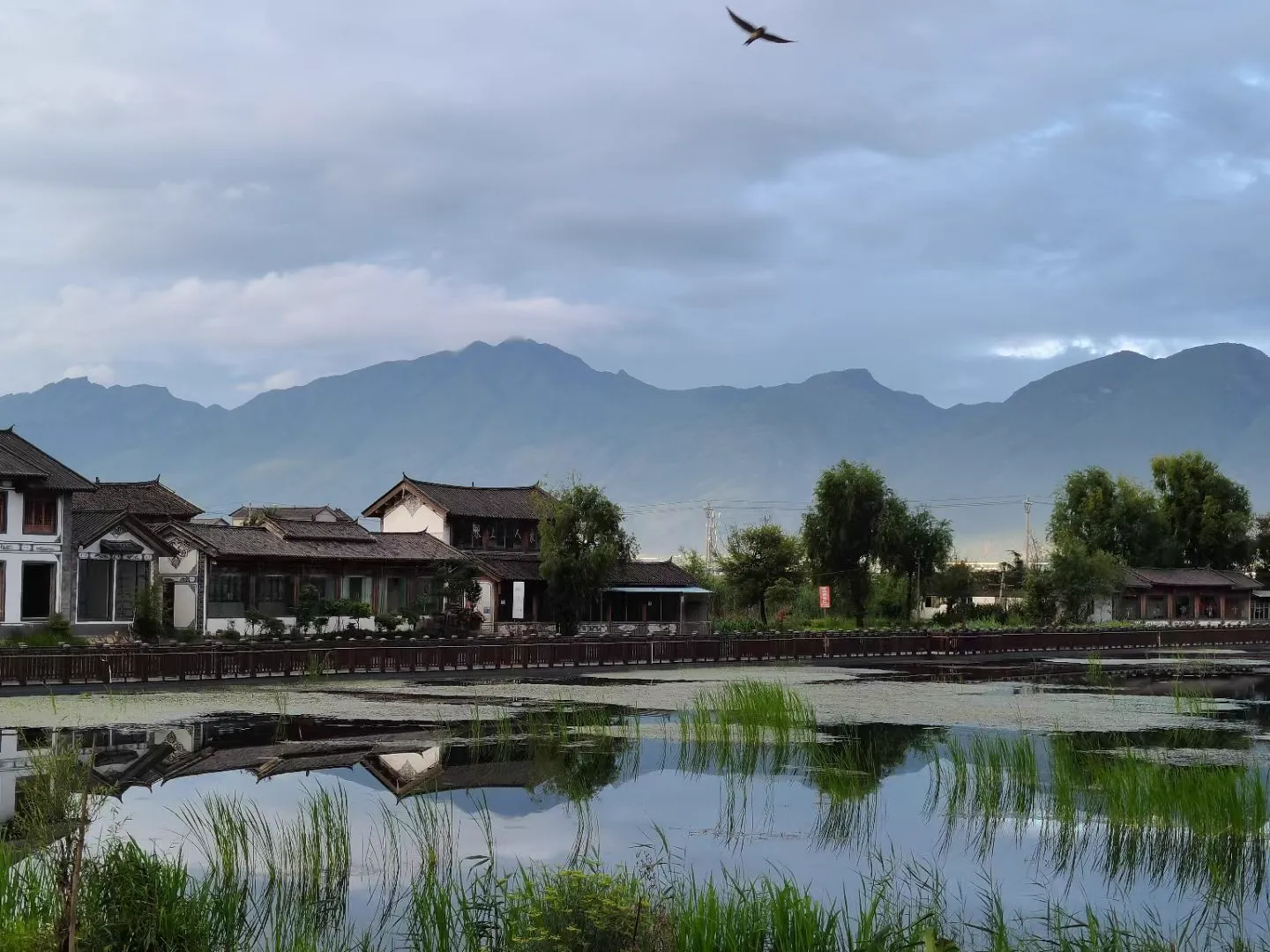
Every time I stand by Erhai Lake, looking at the snow on Cangshan and the water of Erhai, I wonder: 4,000 years ago, did my ancestors also stand here, looking at the same mountains and waters?
The Jiulong Legend: Where We Come From
We Bai people have a beautiful legend, called the Jiulong legend.
According to legend, our ancestor was Shay i, the holy mother of Ailao Mountain. Shay i became pregnant after touching a sunken log in the water and gave birth to 10 children, of whom the descendants of Jiulong became the Bai people.
During the Ming Dynasty, Bai people’s tombstones were often engraved with the three characters “Jiulongzu” (Jiulong clan). These three characters are our memorial to our ancestors and our answer to where we come from.
Legends are legends, but within them lies our love for our hometown.
The Nanzhao and Dali Kingdoms: Dali Was Once a Capital
Dali served as a capital for nearly 500 years.
Both the Nanzhao Kingdom and the Dali Kingdom established their capitals here. Nanzhao was founded by Bai and Yi ancestors. Duan Zongbang, the ancestor of the Duan family of the Dali Kingdom, is honored by us as the supreme god of the Bai people.
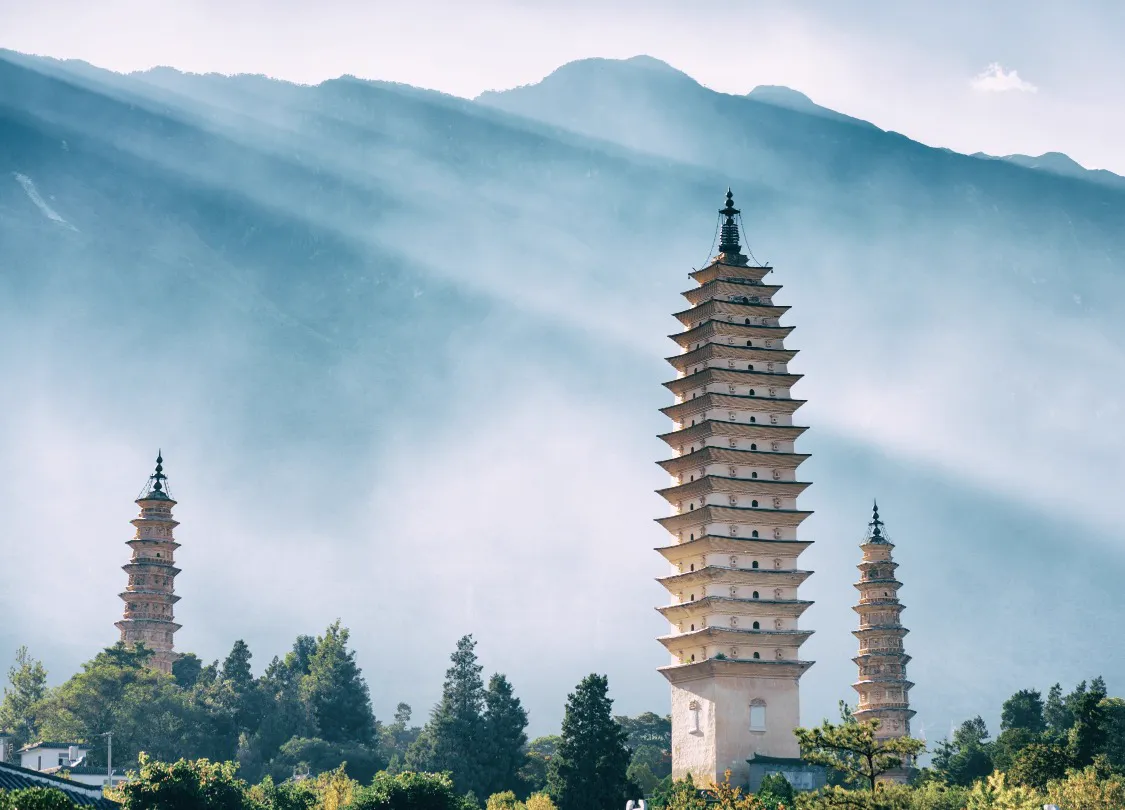
The Three Pagodas of Chongsheng Temple are what remain from that era. Every time I take friends to see the Three Pagodas, I say: look, these three pagodas have stood for more than a thousand years. They witnessed the prosperity of Nanzhao and the rise and fall of the Dali Kingdom, and they still stand here today, watching over us.
“Baiguo Yinyou” (Origins of the Bai Kingdom) is a collection of Bai folk legends about how the Nanzhao and Dali Kingdoms were established. It honors Guanyin as the protector god. A carved edition from 1706 once existed, and in 1957, scholar Fang Guoyu discovered it. This book is our Bai people’s own history.
Dali Today: My Home Is Still There
In 1956, the Dali Bai Autonomous Prefecture was established. In 1982, Dali City was listed among China’s first batch of National Historical and Cultural Cities.
Today, Cangshan is still there, Erhai is still there, Bai villages are still there, and the sound of silversmiths’ hammers is still there.
I often think that no matter how far I travel, Dali will always be my home. The water of Erhai, the snow of Cangshan, Bai songs, and the sound of silversmiths’ hammers—these are all carved into my bones.
From the Erhai people of 4,000 years ago to me today, the history of us Bai people is a history of civilization on the shores of Erhai Lake. And I am honored to be a page in this history.
I am Mr. Jiang, founder of Yunsilver. My home is in Dali. The silver jewelry I make tells the stories of the Bai people. Website: yunsilver.com
Leave a Reply