
Bai Language: The Sound I Grew Up With
I grew up listening to the Bai language.
Bai belongs to the Yi branch of the Tibeto-Burman group of the Sino-Tibetan language family. Today, about 1.24 million Bai people still speak it—more than 60 percent of our ethnic population.
The Bai language has many Chinese loanwords, which sound warm and familiar. Every time I return to Dali and hear elderly people chatting in Bai on the street, my heart warms—that is the sound of my childhood, the sound of home.
Sadly, fewer and fewer young people speak Bai. I often worry: in a few more decades, will Bai be spoken only by the elderly?
Square Bai Script: A Heartbreaking History
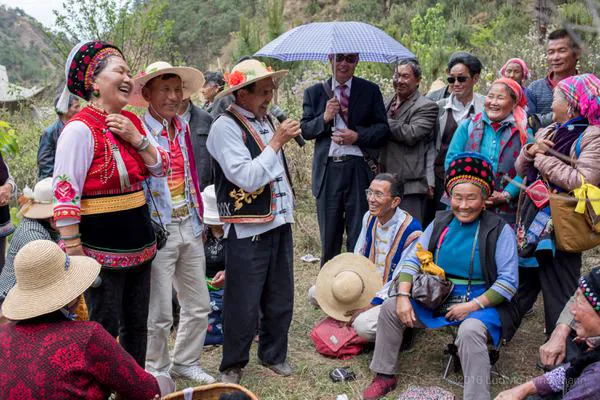
Did you know that we Bai people once had our own written script, called the Square Bai Script?
It was created by imitating Chinese characters, and our ancestors wrote many books in it. The “Baigu Tongji” (General Records of the Bai Kingdom) was originally written in Bai script, and only later translated into Chinese.
But in the late Yuan and early Ming dynasties, Fu Youde and Mu Ying carried out a policy of cultural extermination in Yunnan, burning all official and folk collections of books. The Bai script was essentially wiped out.
Every time I think of this history, my heart aches. The death of a script means so many stories, so much wisdom, so many memories—just gone.
In 1955, people invented a Latin-alphabet phonetic Bai script based on the Chinese pinyin system, which was basically finalized after a revision in 1992. That leaves at least a trace of the Bai language, but it can never compare to the original Square Bai Script.
The Shanhua Stele: A Literary Treasure of the Bai People
The Shanhua Stele, fully titled “Ciji Shanhua: Yong Cang’er Jing” (Verses on Mountain Flowers: Singing of the Cangshan-Erhai Landscape), was erected in the first year of the Jingtai era of the Ming Dynasty (1450).
It was written by Yang Fu, a famous Bai litterateur of Dali in the Ming Dynasty. It was originally embedded in the Guanyin Hall of Shengyuan Temple in Qingdong Village, Xizhou, and now stands in the stele forest of the Dali Ancient City Museum.
The stele describes the beauty of Cangshan Mountain and Erhai Lake in elegant words. Every time I visit the Shanhua Stele, I wonder: more than 500 years ago, when Yang Fu stood between Cangshan and Erhai and wrote these words, what was he thinking? Was it the same as what I feel now—looking at the mountains and waters of my hometown, my heart full of love?
Carving Art: The Skill in Bai Hands
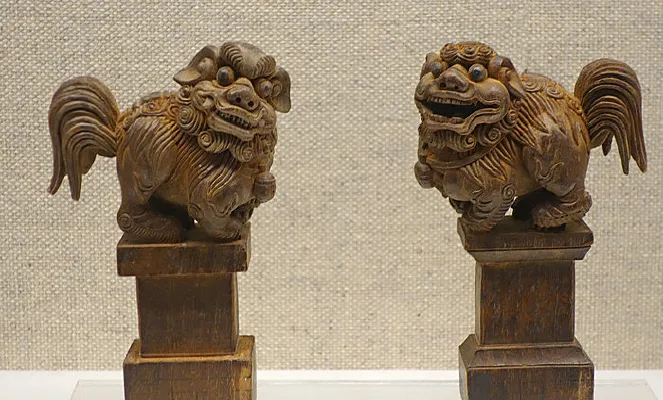
We Bai people are famous for our carving art, especially stone and wood carving.
The Yunnan Hall of the Great Hall of the People in Beijing uses Bai wood carving. Walk into a Bai village, and you will see exquisite wood and stone carvings on the gate towers, window lattices, and screen walls of every household.
Flowers, birds, fish, insects, and stories of people have all been carved by craftsmen into wood and stone. The carpenters and stonemasons of Jianchuan traveled far and wide, carrying Bai carving art across the country.
I often feel that Bai hands are the most skillful. Wood comes alive in their hands; stone gains stories in their hands.
Music and Dance: The Joy of the Bai People
We Bai people love to sing and dance.
Bai songs fall into three categories: “qu,” “diao,” and “qiang.” The most famous is “Ni Qiu Diao” (Loach Tune), known as the “mother of tunes.” We traditionally love antiphonal singing, and the Shibao Mountain Song Festival in Jianchuan, which originated in the Nanzhao period, remains to this day a place where young Bai men and women meet and fall in love.
Among Bai dances, the most famous is “Bawang Bian” (Overlord’s Whip), a lively group dance. At rural festivals, people also perform the “Bench Dragon” and the “Straw Hat Dance.”
Whenever there is a festival in the village, men and women, young and old, all come out to sing and dance. That kind of joy cannot be faked—it comes from deep inside.
Intangible Heritage: Living Traditions
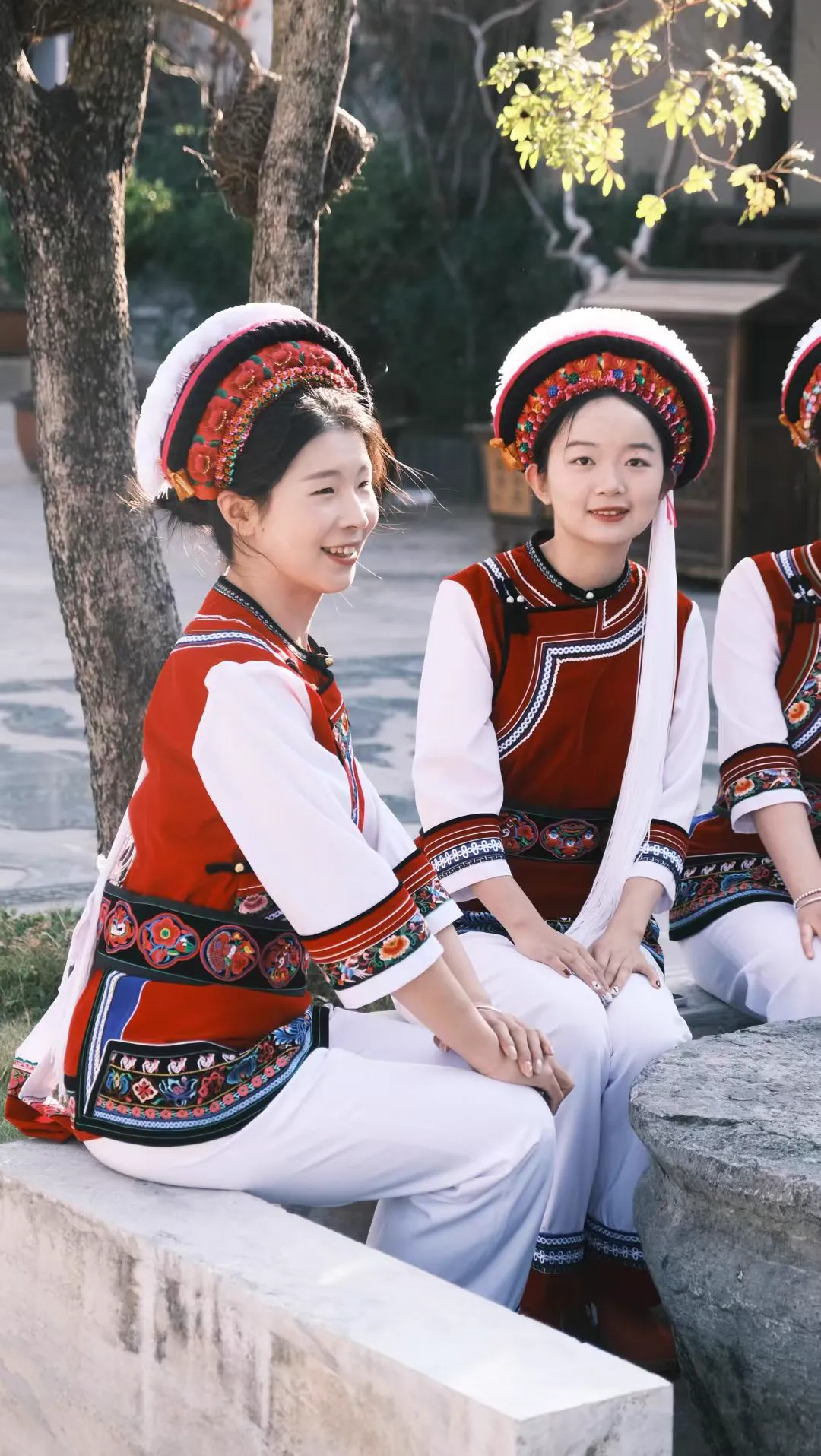
Our Bai intangible cultural heritage is all alive:
In Zhoucheng, tie-dye is still being dyed and worn; in Jianchuan, wood and stone carvings still go up on gate towers; in Dali, the Three-Course Tea is still served when guests arrive; and the tile cats on rooftops still guard our homes.
These are not specimens in a museum. They are part of our daily life. As long as Bai people are still here, these traditions will still be here.
Making silver jewelry is the same for me. Silver jewelry is not decoration—it is part of Bai life, part of our culture. I hope that through silver jewelry, more people will come to know the Bai people and love the Bai people.
I am Mr. Jiang, founder of Yunsilver. My home is in Dali. The silver jewelry I make tells the stories of the Bai people. Website: yunsilver.com
Leave a Reply