What Is Wamao
In rural Yunnan, on the rooftops of every household stands a kind of guardian beast called wamao.
Wamao are generally made of pottery clay, shaped, glazed, and fired in a kiln. They carry the dual meanings of guarding the home against evil and attracting wealth and fortune.
Wamao culture is widely distributed in Yuxi, Qujing, Dali, Chuxiong, Wenshan, and around Kunming in Yunnan, with a history of over a hundred years in the province. In 2022, it was listed as a Yunnan provincial intangible cultural heritage.
I grew up looking at the wamao on rooftops. Every time I looked up and saw a wamao, I felt especially at ease, feeling that with it there, the home was safe.
Cat Face, Tiger Spirit: Why Cat, Not Tiger
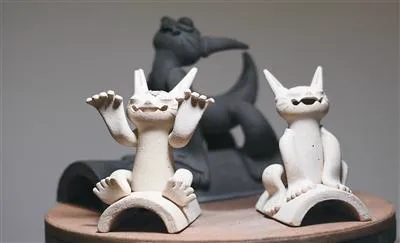
Although called a cat, the wamao is actually modeled on a fierce tiger—capturing “a cat’s face with a tiger’s spirit.”
Usually with mouth wide open and eyes round, it is meant to devour evil from all directions and welcome wealth. The reason it is called a cat and not a tiger is the saying “raising a tiger brings trouble,” while raising a cat (even one that looks like a tiger) is safe.
A pottery “cat” with the majesty of a tiger—this is the wonder of wamao. From afar, wamao look mighty and awe-inspiring, guarding the entire village.
The Rooftop Watchtower: Where Wamao Stand
Wamao are placed on the main ridge, flying eaves, or door lintel ridge tiles of rural Yunnan rooftops, serving as objects to ward off evil.
In many villages, most rooftops have wamao of different shapes, standing like watchtowers. From afar, the village rooftops are filled with wamao, like a team guarding the village.
Every time I return to the village and see the wamao on the rooftops from afar, I know I am home. That feeling is like seeing an old friend at the door waving to me.
The Consecration Ritual: Giving Wamao Spirit
Wamao are considered spiritual beings and must undergo a complete sacrificial ritual before they are said to have divine power, called “kaiguang” (consecration).
An auspicious even-numbered day must be chosen, in the second or eighth lunar month, and a duangong (ritual master) invited to perform the consecration. During the ritual, the duangong holds a red rooster and chants incantations, bites the rooster’s comb to draw blood, and drips the blood on the wamao’s eyes, nose, mouth, ears, and body, and places pine nuts, melon seeds, sorghum, and other items in the wamao’s mouth.
A wamao without consecration is just pottery; only after consecration does it gain spirit and truly guard the home against evil.
When I was young, I watched a consecration ritual once. The duangong’s chanting, the rooster’s crowing, the villagers’ prayers, all woven together—that solemn feeling I still cannot forget.
Craftsmanship: Slow Work, Fine Results
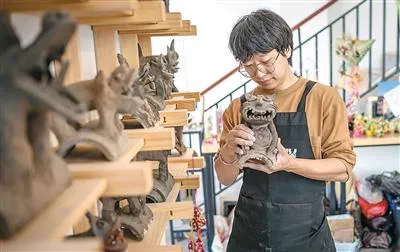
Wamao are mostly pottery, with a few made of stone. The hand-shaping process has many steps; only a few can be made in a day. The raw blanks must be dried in the shade, and kiln firing takes up space.
The protruding parts of wamao—ears, tongue, whiskers—break easily. Even slight damage is considered incomplete and spiritless, losing its evil-warding power, and it cannot be sold.
Every wamao is pinched by hand by a craftsman, one of a kind. Just like the silver jewelry we make, every piece is handmade and carries warmth.
Feng Shui Function: Devouring Negative Energy
Placed on rooftops, when a house is negatively affected by its surroundings (such as directly facing a tall building, called “qiang,” or sharp corners pointing at it, called “jianjiao sha”), a wamao facing the dangerous direction can devour the negative energy.
The hollow body of wamao symbolizes the ability to swallow gold and silver and attract wealth. The wide-open mouth can both devour evil and receive blessings.
Su Longxiang: Guardian of Wamao
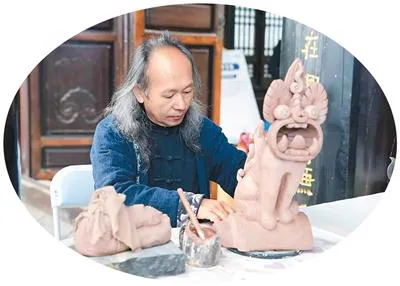
Su Longxiang was born in Fengyi Town, Dali. He began learning pottery sculpture from his grandfather at age 10 and is now a Yunnan provincial intangible cultural heritage inheritor of wamao making.
He has created nearly 23,000 works, developed more than 200 kinds of wamao cultural and creative products (jewelry, fridge magnets, tea sets, etc.), and taught more than 200 apprentices. His works range from 2–3 centimeters to nearly 4 meters tall.
The Wamao Museum in Panlong District, Kunming, houses nearly 400 wamao from across Yunnan, each with a different form—some with neat square teeth looking gentle, some decorated with fish-scale patterns, horns, or wings, some so abstract that their prototype is hard to recognize.
From rooftop guardian beasts to museum artworks to cultural and creative products, wamao are entering more people’s lives. Just like our silver jewelry, traditional things, as long as they are passed down with care, will never become outdated.
I am Mr. Jiang, founder of Yunsilver. My home is in Dali. The silver jewelry I make tells the stories of the Bai people. Website: yunsilver.com
Leave a Reply