Category: Uncategorized

  • 999 Fine Silver Jewelry Manufacturer: Why Fine Silver Can Only Be Handmade

    What Is 999 Fine Silver?

    999 fine silver contains 99.9% pure silver—the highest purity available on the market.

    Unlike 925 sterling silver (92.5% silver, harder, suited to machine mass production), 999 fine silver is 99.9% silver and soft, so it must be crafted by hand. Every piece is hammered into shape by a craftsman, one strike at a time.

    This “softness” is precisely the value of 999 fine silver—it cannot be machine-made. Only handcrafting can shape it.
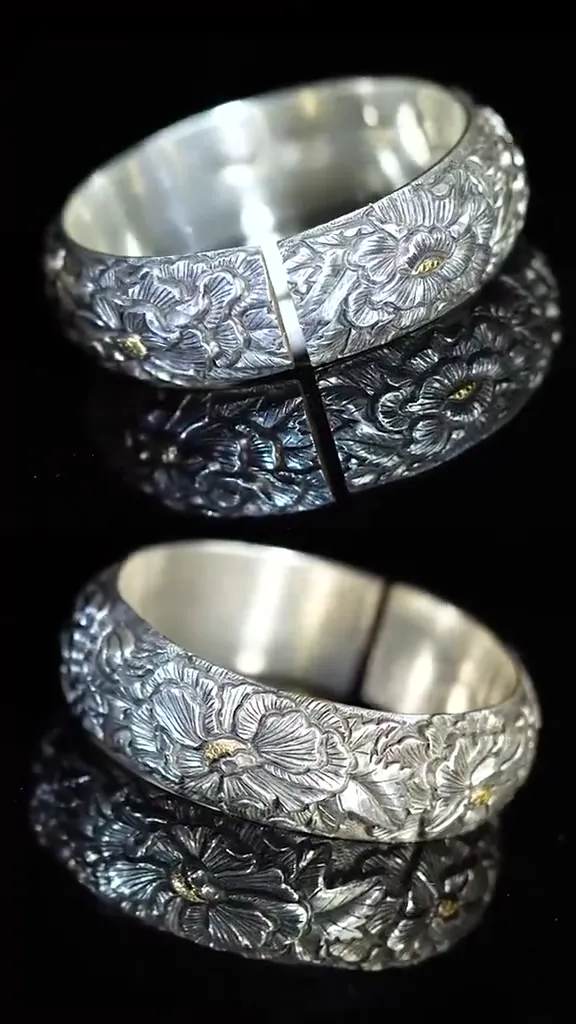
    Hibiscus bangle finished product
    Hibiscus bangle with gold flower centers, handmade 999 fine silver

    Why 999 Can Only Be Handmade

    999 fine silver is too soft. Machine stamping deforms it and cracks it.

    Only handcrafting can master it:

  • Forging: The craftsman hammers the silver block little by little into the desired shape, guided entirely by feel.
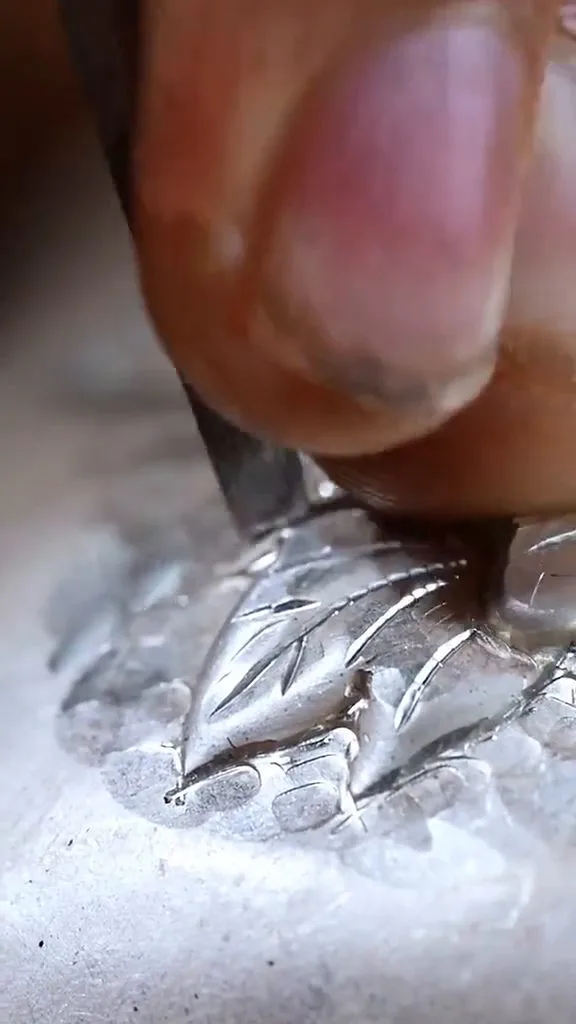
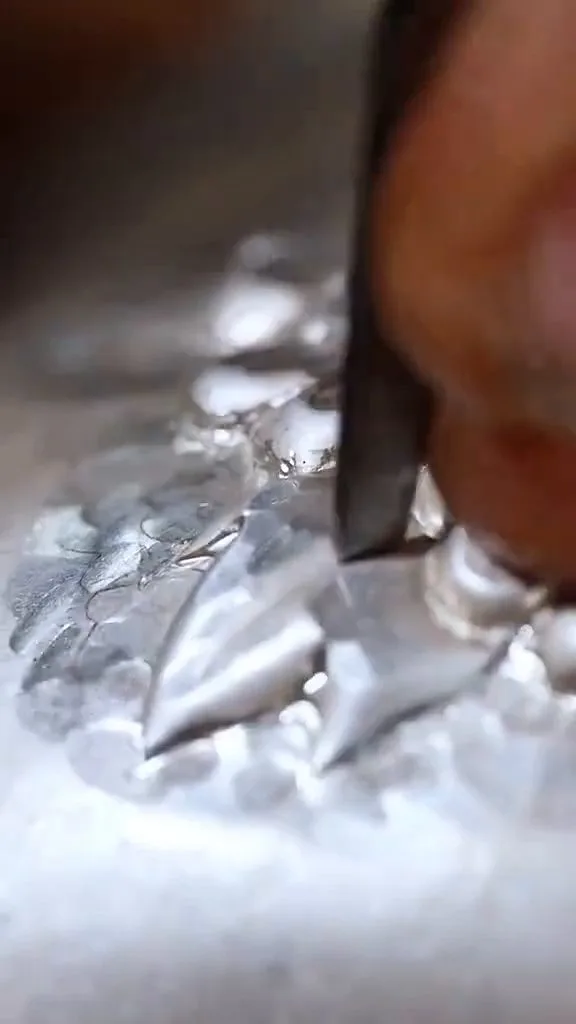
  • Chasing: Using a chasing tool to chase patterns into the silver surface—one strike is final, no room for error.
  • Polishing: Hand polishing preserves the warm, natural luster of silver. Machine polishing makes it look harsh and glaring.
  • A machine can stamp dozens of pieces per minute. A craftsman can only finish one semi-finished piece per day. This is why 999 fine silver costs more—you pay for the labor, you pay for the time.
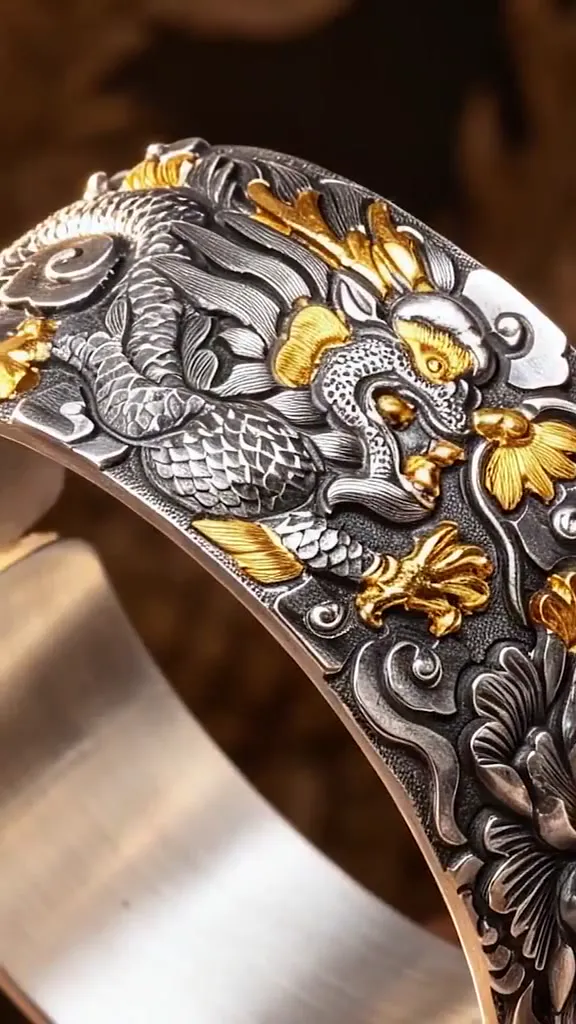
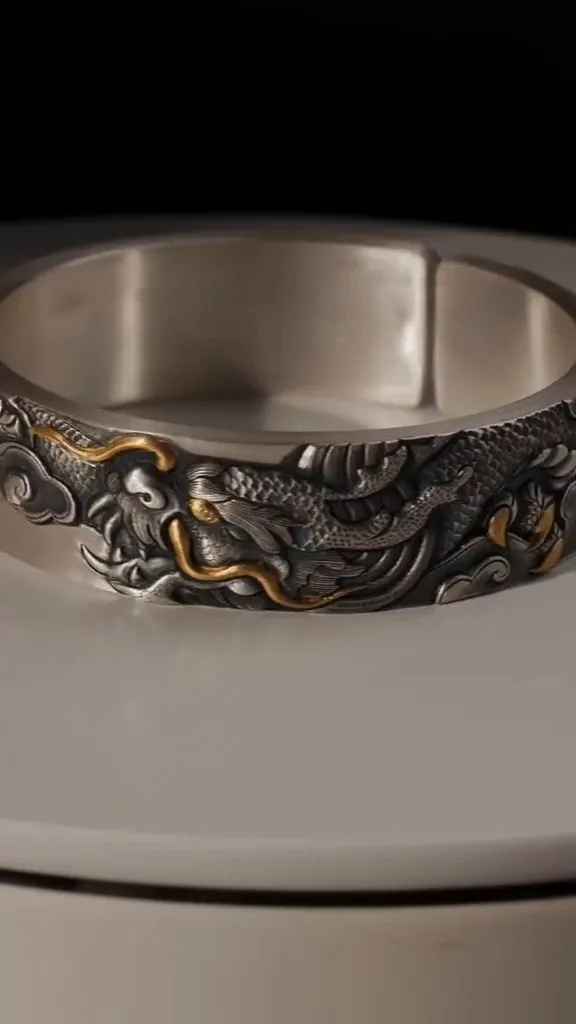
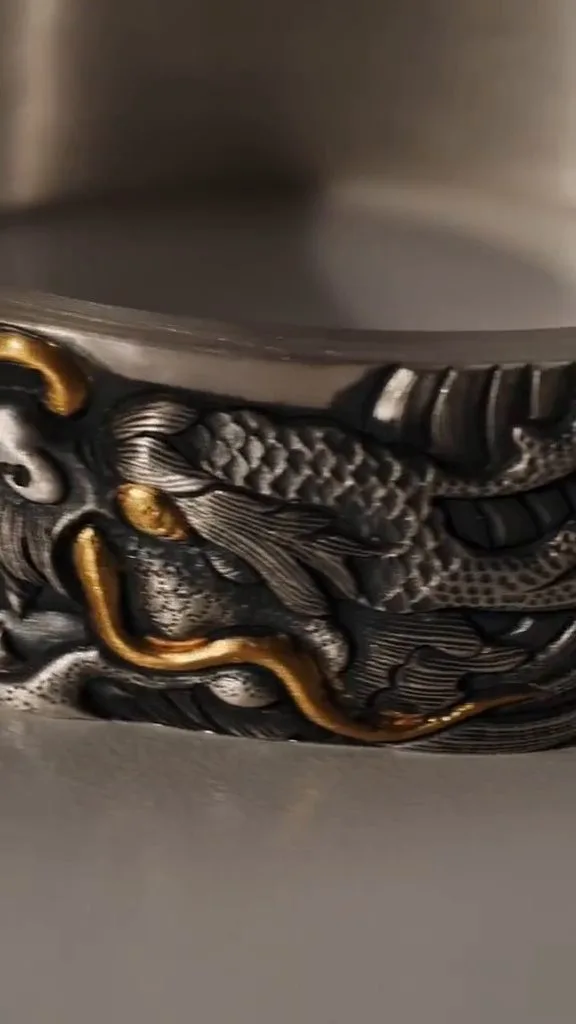
    Dragon-phoenix bangle chasing detail
    Dragon-phoenix bangle: intricate hand-chased details in 999 fine silver

    Bai Silver Craft: Roots of a Thousand-Year Tradition

    Dali, Yunnan, is the birthplace of Bai silver craft in China.

    The silver-making tradition here spans over a thousand years. Bai craftsmen begin learning as children, following masters to learn chasing, forging, and inlay from their early teens. Nearly every household in the villages has a silversmith. Silver is part of daily life—brides wear silver bangles at weddings, babies receive silver locks at one month old, families exchange new silver ornaments at festivals.

    Bai homes feature white walls and gray tiles, with landscape and flower paintings on the screen walls, and bougainvillea blooming in the courtyards. The silversmith’s workshop sits right in such a courtyard, the sound of hammers ringing from morning to night.

    Craftsmanship grown in this environment cannot be replicated by three months of factory training.

    Yunsilver: A 999 Handmade Workshop in Dali

    Yunsilver is based in Dali.

    We are a manufacturer specializing in 999 handmade fine silver customization. No ready stock, no machine-made goods.

    Every product is completed by hand:

  • Melting: 999 silver material is melted and cast into silver blocks.
  • Forging: Hand-hammered into shape, adjusting thickness and curvature.
  • Chasing: Patterns are chased onto the silver surface—peonies, phoenixes, auspicious clouds, all by hand.
  • Polishing: Hand-polished to preserve silver’s natural luster.
  • Inspection: Each piece is weighed, measured, and checked for fineness. Anything substandard goes back for rework.
  • From melting to finished product, the entire process is traceable.

    What Is 999 Fine Silver Best For?

    999 fine silver is not suited for cheap everyday jewelry. It is ideal for:

  • High-End Customization: Brand-exclusive designs, limited editions—products that tell a story through craftsmanship.
  • Cultural Gifts: Bai patterns, zodiac themes, festival motifs—pieces with cultural depth.
  • Collectible Pieces: Silver teapots, silver cups, silver ornaments that grow more beautiful with age.
  • Wedding Silver: Complete silver sets worn by Bai brides at weddings, symbolizing good fortune.
  • If you need bulk goods at a few dollars per piece, that is not what we make. If you want pieces that tell stories and can be passed down through generations, 999 is the only choice.

    How to Find a Genuine 999 Manufacturer

    Many claim to make 999, but few truly can. Here are three ways to verify:

    Tip 1: Inspect the Workshop

    Ask for a video tour of the factory. A genuine 999 workshop must have hammers, chasing tools, anvils, and melting furnaces, with craftsmen working by hand. If you only see machines and assembly lines, that is not a 999 workshop.

    Tip 2: Check the Lead Time

    A single 999 handmade piece takes at least several days; bulk orders take weeks. If a supplier promises delivery in three days, it is certainly machine-made goods masquerading as handmade.

    Tip 3: Verify the Testing

    Request an XRF test report showing silver content of 99.9%. After receiving samples, send them for independent testing—the data does not lie.

    Genuine 999 products bear a “999 Fine Silver” hallmark stamped on the inner band. This is the most direct proof of authenticity.
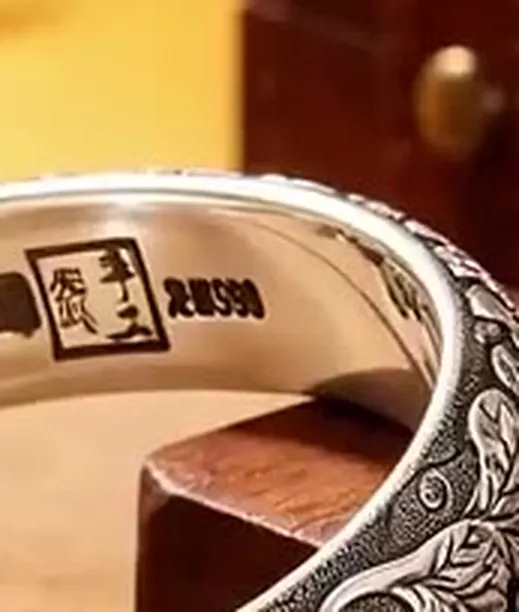
    999 fine silver hallmark
    Genuine 999 fine silver hallmark stamped on the inner band

    Minimum Order Quantity and Payment

  • MOQ: Handmade customization typically starts at 50–100 pieces, as each piece must be crafted individually.
  • Samples: You can start with 1–3 sample pieces; sample fees are deductible from the bulk order.
  • Sample Lead Time: Handmade samples typically take 7–15 days.
  • Payment Terms: T/T (bank transfer), 30% deposit + 40% before production + 30% before shipment.
  • Why Choose Dali, Yunnan?

    Dali, Yunnan, is the birthplace of Bai silver craft in China, with a silver-making tradition spanning over a thousand years.

    Craftsmen here learn from childhood, mastering chasing, forging, and inlay. Yunsilver is based in Dali, where every product is completed by hand—from melting, forging, and chasing to polishing—with full traceability throughout.

    If you need 999 handmade fine silver customization, we welcome your inquiry.


    Yunsilver is a silver jewelry manufacturer based in Dali, Yunnan, China, specializing in 999 handmade fine silver OEM/ODM customization. Website: yunsilver.com
  • How to Source Silver Jewelry from China: A Complete B2B Buyer Guide

    How to Source Silver Jewelry from China: A Complete B2B Buyer Guide

    Why Source Silver Jewelry from China

    China is one of the world’s largest silver jewelry producers, with a complete supply chain, diverse craftsmanship, and competitive costs. But for overseas B2B buyers, information asymmetry is the biggest risk: you don’t know if the other party is a factory or a trader, handmade or cast, 999 or a lower purity, real silver or plated.

    This guide helps you systematically avoid these pitfalls.

    Hand-chased silver cup detail

    Step 1: Identify Your Supplier Type

    Manufacturer (Factory)

    • Has its own workshop, workers, and equipment
    • Accepts OEM/ODM customization
    • Higher MOQ, but lower unit price and direct quality control
    • How to verify: Ask for a live video tour of the factory, workshop, and orders in production

    Trader

    • Has no factory, earns margin by reselling
    • Flexible MOQ, but quality control is one layer removed
    • Risk: When problems arise, parties blame each other and you can’t find the real producer

    Wholesaler

    • Sells ready stock, no customization
    • Good for small, fast restocking, not for building a brand

    Yunsilver’s position: Manufacturer. We have our own workshop in Dali, Yunnan, specializing in 999 handmade fine silver customization.

    Step 2: Confirm Silver Purity

    This is where corners are most easily cut.

    925 sterling silver (92.5% silver) is harder and suited to machine mass production; it is the common international standard.

    999 Fine Silver

    • 99.9% silver content
    • Soft texture, must be handmade
    • Ideal for high-end customization, cultural gifts, and collectible-grade products

    How to Verify

    1. XRF test report: Ask the supplier for a third-party X-ray fluorescence test report showing silver content
    2. Sample testing: Order a sample first, then send it for testing yourself upon receipt
    3. Check the price: 999 fine silver costs far more in material than ordinary silver jewelry. If the quote is suspiciously low, something is wrong

    Dali ancient town at sunset, Yunnan

    Step 3: Confirm the Craftsmanship

    Hand-Chasing

    • Artisans hammer patterns one stroke at a time with chasing tools
    • Each piece has subtle differences, which is proof of handwork
    • Ideal for 999 fine silver, because soft metal is not suited for machine stamping

    Casting

    • A wax mold is made first, then molten silver is poured in
    • Suitable for mass production, lower cost

    Stamping

    • Machine-pressed, fastest speed
    • Only suitable for simple designs, with coarse details

    Key question: Ask the supplier “Is this piece handmade or cast?” If the answer is vague, or they say “semi-handmade,” be cautious.

    Step 4: Negotiate Minimum Order Quantity (MOQ)

    • Handmade customization: Typically 50–100 pieces, because each piece must be made individually by an artisan
    • Cast production: Typically 200–500 pieces, because mold-making has costs
    • Ready stock: A few pieces can be bought, but with no customization room

    Negotiation tip: If your order is small, ask “Can we start with a sample order?” Reputable factories are usually willing to make 1–3 sample pieces, with the sample fee deductible from the bulk order.

    Step 5: The Sampling Process

    1. Provide design drawings: CAD drawings, 3D models, or hand sketches all work—the more detailed, the better
    2. Confirm material and craftsmanship in writing: Silver purity, craft method, surface treatment
    3. Sampling lead time: Handmade samples typically take 7–15 days, cast samples 10–20 days
    4. Inspect the sample: Check dimensions, weight, purity, and craft details; photograph and archive
    5. Confirm bulk production: After sample approval, sign the contract, pay the deposit, and start bulk production

    Note: Samples and bulk goods must match. If bulk goods differ significantly from the sample, stop immediately and communicate—don’t accept the compromise.

    Step 6: Quality Inspection

    Pre-Shipment Inspection

    • Sampling rate: Typically 10%–20%
    • Check items: Dimensions, weight, purity, surface treatment, packaging
    • You can hire a third-party inspection company (such as SGS or BV), or send your own person

    Common Issues Checklist

    • Dimensional deviation exceeding ±0.5mm
    • Surface scratches or oxidation spots
    • Silver content below standard
    • Damaged packaging or missing accessories

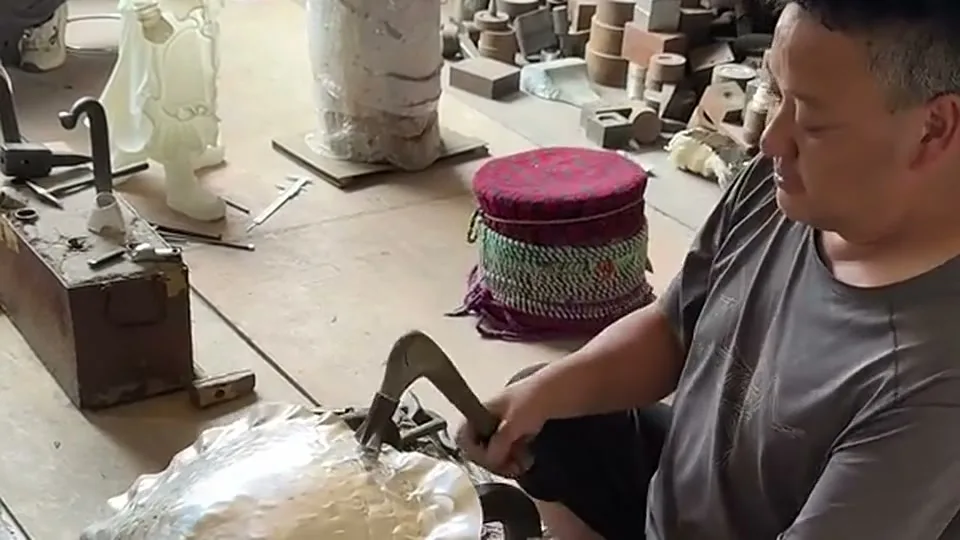
    Craftsman hammering silver in workshop

    Step 7: Logistics and Payment

    Payment Methods

    • T/T (Telegraphic Transfer): Most common, 30% deposit + 40% payment before production + 30% payment before shipment
    • L/C (Letter of Credit): For large orders, bank-guaranteed, safe but more paperwork
    • PayPal/Western Union: Usable for small sample fees, not recommended for bulk orders

    Shipping Methods

    • Air freight: Fast (5–7 days), expensive, suitable for small, high-value orders
    • Sea freight: Slow (20–40 days), cheap, suitable for large volumes
    • Express (DHL/FedEx): Best for samples and small batches

    Tariff Reminder

    • Silver jewelry import tariffs vary by country—check before ordering
    • Ask the supplier for the correct HS code and certificate of origin

    Common Pitfalls Summary

    Pitfall What It Looks Like Countermeasure
    Fake factory Trader claiming to be a factory Live video factory tour, check business license scope
    Purity fraud Passing off lower-purity silver as 999 XRF testing, sample testing
    Craft fraud Claiming cast pieces are handmade Check details, price, and lead time
    Sample vs. bulk mismatch Beautiful sample, rough bulk goods Pre-shipment inspection, write standards into the contract
    Delivery delays Promised 15 days, dragged to 30 days Write delivery terms and penalties into the contract
    Hidden fees Quote excludes mold fees, packaging fees Require an all-in price, confirmed in writing

    Why Choose Dali, Yunnan

    Dali, Yunnan is the birthplace of Bai ethnic silver craftsmanship in China, with over a thousand years of silver-making tradition. Artisans here learn from childhood, mastering chasing, forging, and inlaying.

    Yunsilver is based in Dali. We don’t sell ready stock—only customization. Every piece is handmade by artisans, from melting silver, forging, chasing, to polishing, fully traceable throughout.

    If you need to source silver jewelry from China, especially 999 handmade fine silver customization, welcome to contact us.


    Yunsilver is a silver jewelry manufacturer based in Dali, Yunnan, China, specializing in 999 handmade fine silver OEM/ODM customization. Website: yunsilver.com

  • Silver Jewelry Manufacturer vs Wholesaler: Which Do You Need?

    Choose a manufacturer when you need jewelry made to your design and specification; choose a wholesaler when you want ready-made stock to resell as-is. They are different businesses solving different problems — and confusing them is one of the most expensive mistakes a young jewelry brand can make.

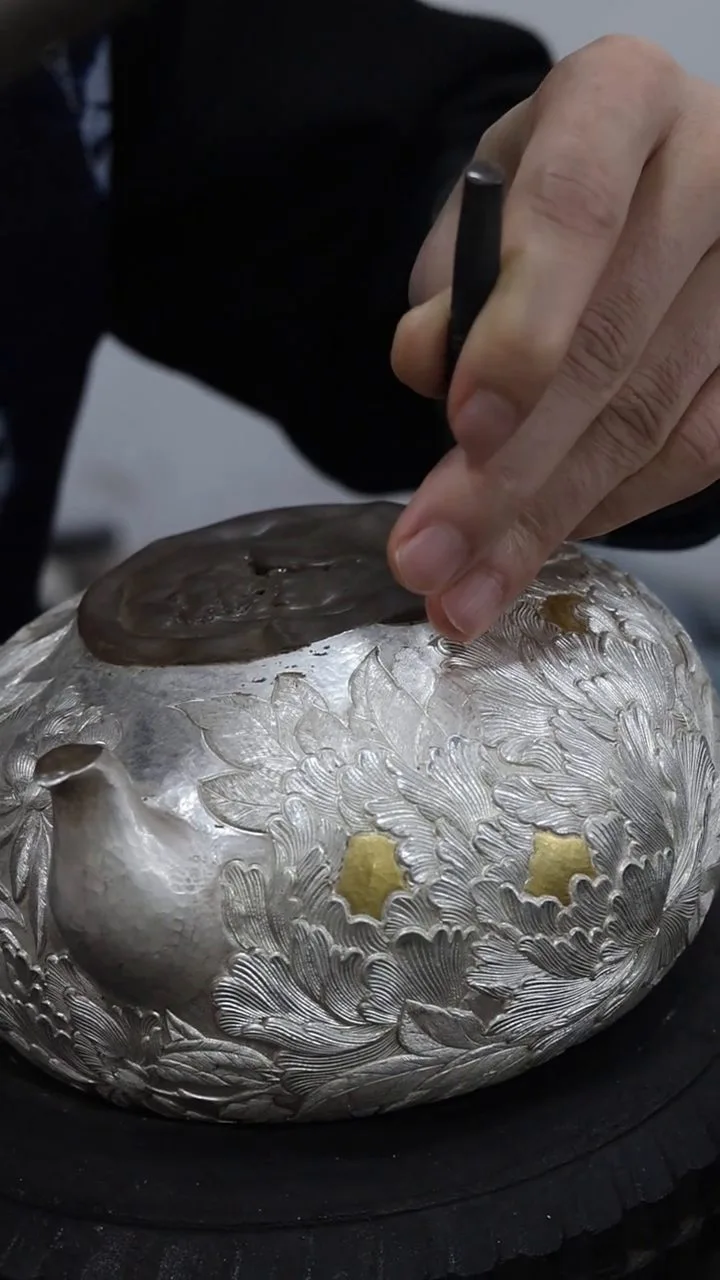
    Chasing a silver teapot — a manufacturer's value is craft, not inventory
    Chasing a silver teapot — a manufacturer’s value is craft, not inventory.

    To be explicit about where we stand: Yunsilver is a custom silver jewelry manufacturer (OEM/ODM) in Dali, Yunnan — we make jewelry to order. We are not a wholesaler. If you need a thousand units of an existing design shipped tomorrow, a wholesaler serves you better. If you need your design brought to life in silver, that is our work.

    Our core is 999 handmade fine silver: every piece we make to order is 999 fine silver, crafted entirely by hand.

    What Each One Actually Does

    A manufacturer transforms raw material into finished jewelry. The process starts from your tech pack, CAD file, or sample: engineering the design for production, making samples, refining through approval rounds, then producing your order. The manufacturer’s value is craft capability — forging, chasing, setting, finishing — and process control across every unit.

    A wholesaler buys finished jewelry in bulk and resells it in smaller lots. Their value is inventory and logistics: breadth of catalog, immediate availability, low minimums per style. They do not make anything; when you ask for a design change, they can only offer what their suppliers already produce.

    A trader or agent sits between — sourcing from factories on your behalf for a commission. Useful if you lack sourcing capacity, but you pay a margin for the intermediation and lose direct visibility into production.

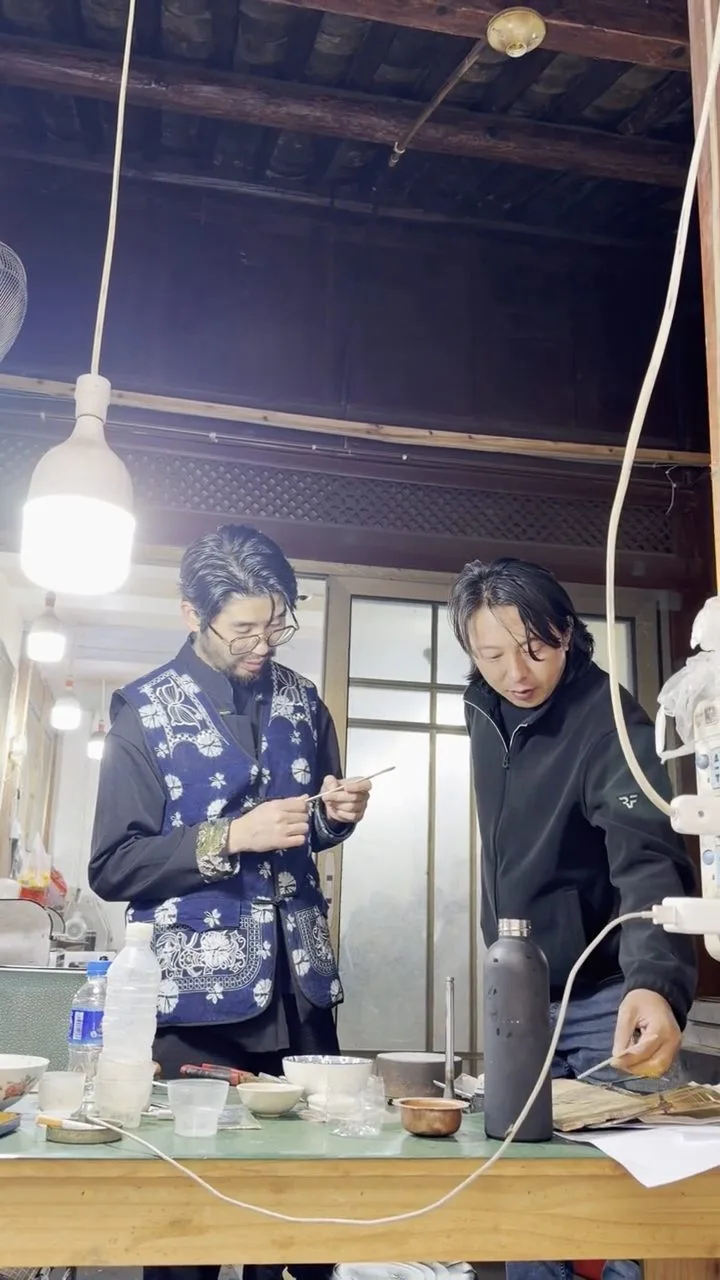
    Workshop scene — two benches, two different businesses
    The workshop floor — where manufacturing happens, not warehousing.

    Side-by-Side Comparison

    Manufacturer (like Yunsilver)WholesalerTrader / Agent
    What you getYour design, made to specReady stock, as-isFactory access via middleman
    CustomizationFull — dimensions, alloy, finishNone — take it or leave itLimited — depends on factory
    Lead timeWeeks (sampling + production)Days (ships from stock)Weeks plus coordination lag
    Best forBrands building a distinct lineRetailers needing fast inventoryBuyers without sourcing team
    RelationshipDirect — you see the processTransactionalIndirect — filtered information
    Cost structurePay for craft + materialsPay for convenience + markupPay factory price + commission

    When a Wholesaler Is the Right Call

    If you are testing retail, need diverse styles fast, or sell where speed beats distinctiveness, buy wholesale — many successful retailers never manufacture. Just don’t expect a wholesaler to develop your designs; that is not their business.

    When You Need a Manufacturer

    You need a manufacturer when your edge is the product itself: a signature aesthetic, a quality tier wholesalers can’t reach, or designs that don’t exist in any catalog. Custom also gives material control — nickel-free materials, specific finishes — that wholesale never offers.

    The trade-off is time and commitment. Sampling takes rounds; production takes weeks; minimums reflect real setup costs. Brands that understand this get jewelry nobody else sells. Brands that expect wholesale speed from a factory end up frustrated on both sides.

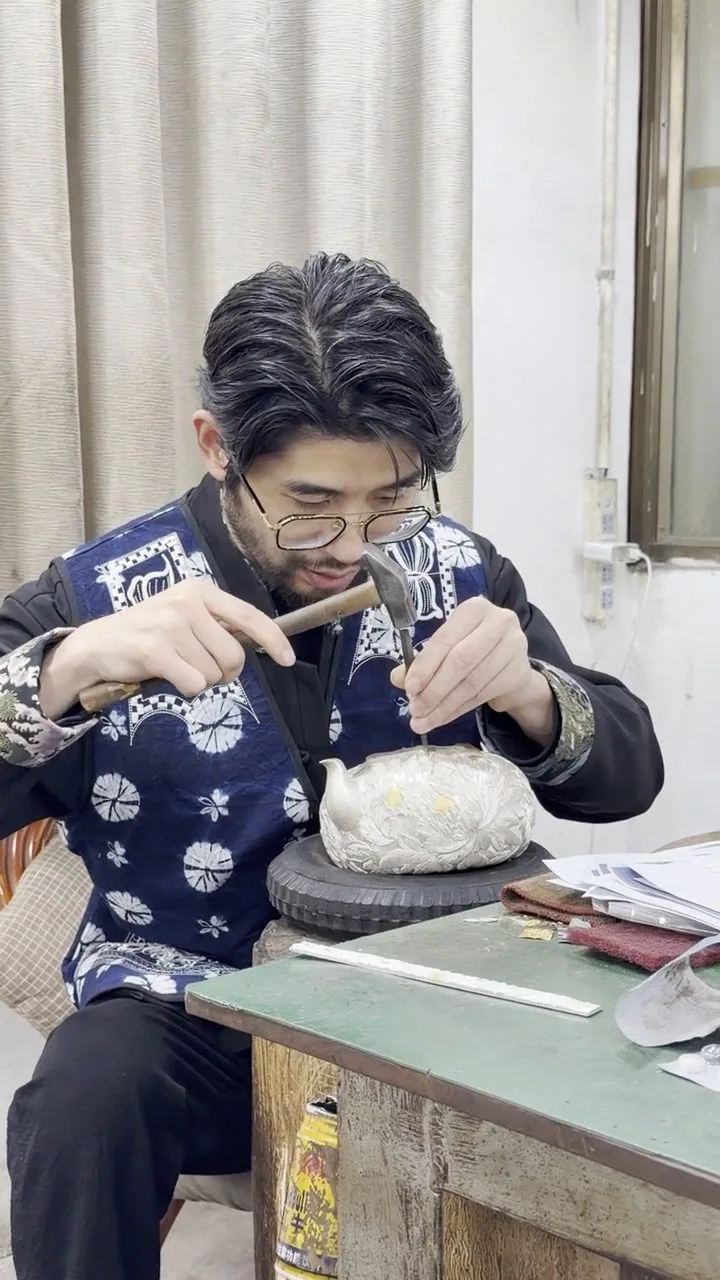
    Silversmith chasing a teapot — every piece starts at a bench like this
    At the bench — every custom piece starts here, not in a warehouse.

    First-Hand Evidence: What Custom Manufacturing Looks Like

    Our Dali workshop runs on the manufacturer model end to end. A typical custom project: the client sends designs, our master reviews them for manufacturability — flagging, say, a wall thickness that won’t survive chasing, or a hinge design that needs re-engineering. First samples go back with notes, not just product. Approved pieces move to batch production where each unit passes through the same bench sequence: forming, annealing, chasing, setting, polishing, inspection.

    What we don’t do: we don’t stock finished jewelry, we don’t sell other factories’ products, and we don’t offer a wholesale catalog. When a buyer asks for “your 50 best-sellers at wholesale price,” we explain the mismatch and, if appropriate, suggest ODM adaptation — modifying an archive design into something theirs. That is still manufacturing, not wholesaling.

    How to Vet a Manufacturer

    Ask for the workshop, not the showroom: photos or video of the actual benches. Ask who does the chasing and setting — in-house or subcontracted. Ask about sampling fees and design exclusivity terms. A real manufacturer answers with specifics; a trader answers with reassurance.

    FAQ

    Can a manufacturer also sell small wholesale lots?
    Some do, but be cautious: a “manufacturer” pushing ready stock may actually be a trader. Ask to see production of your specific design first.

    What are typical minimums for custom manufacturing?
    They vary by piece complexity — hand-chased work has different economics than simple bands. Discuss your designs directly with the factory rather than relying on generic MOQ figures.

    Is custom manufacturing always more expensive than wholesale?
    Per unit, often yes at small quantities — you’re paying for setup, sampling, and craft labor. At scale, and measured by differentiation and margin, custom usually wins.

    How do I protect my designs with a manufacturer?
    Put ownership and exclusivity in writing before sampling: who owns the CAD files, whether the factory may produce the design for others, and for how long. Reputable manufacturers expect this conversation.

    Why does Yunsilver not offer wholesale?
    Because our workshop is built for making, not stocking. Every bench is set up for custom production — forging, chasing, finishing to specification. Wholesale would need a different business: inventory capital and logistics we deliberately don’t carry, so we can focus on craft.

  • How to Prevent Silver Jewelry from Tarnishing

    The most effective tarnish prevention is simple: keep silver dry, store it sealed with anti-tarnish strips, and wear it regularly — body oils actually slow tarnish. Tarnish is a surface chemical reaction, not damage, and every method below works by limiting the silver’s exposure to sulfur compounds in air, sweat, and water.

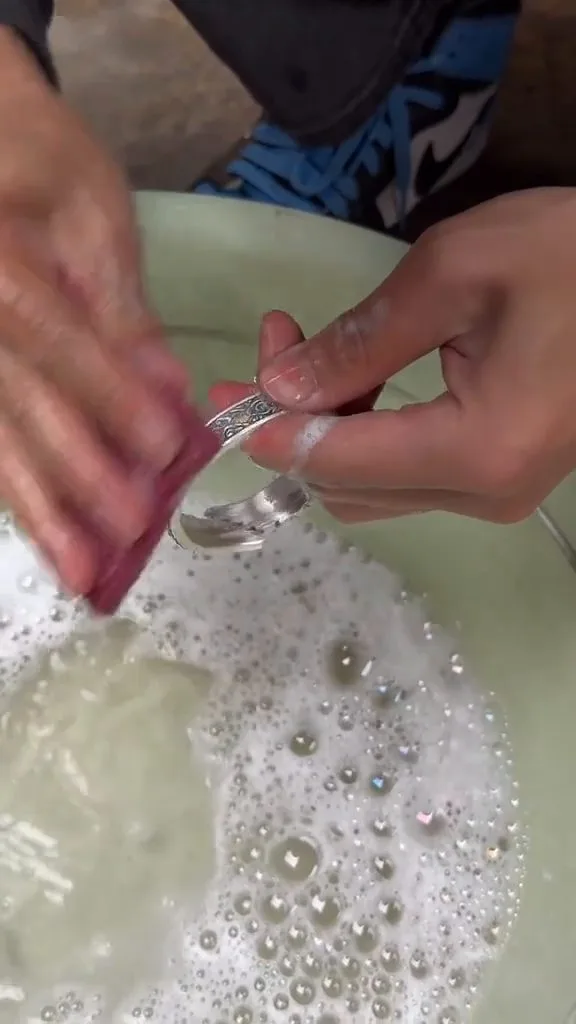
    Washing a silver bracelet — mild soap and water for everyday care
    Mild soap and water — the first step in everyday silver care.

    Whether you are a brand advising customers or a buyer evaluating a supplier’s finishing, these are the practices that work.

    Why Silver Tarnishes

    Tarnish is silver sulfide — a dark layer that forms when silver reacts with hydrogen sulfide and other sulfur compounds present in air, perspiration, perfume, and even some foods and rubber. The copper in sterling silver accelerates the reaction slightly, which is why 925 tarnishes faster than 999.

    Key point: tarnish is microns thin and entirely reversible. It is not corrosion eating into the metal. Any “permanent tarnish damage” claim is a myth — though deep neglect can require professional re-polishing.

    Prevention Methods That Work

    Wear it often. This surprises people, but regular wear is genuinely protective. Skin oils form a thin barrier, and the gentle friction of daily use burnishes the surface. Silver left unworn in a drawer tarnishes faster than silver worn daily.

    Store it sealed and dry. Airtight zip bags with an anti-tarnish strip (activated carbon or silver cloth) are the gold standard for storage. Keep pieces separated so they don’t scratch each other. Avoid bathrooms — humidity accelerates everything.

    Keep chemicals away. Perfume, hairspray, sunscreen, and household cleaners all attack silver. Put jewelry on last when dressing, take it off before swimming — chlorinated pools are especially harsh — and never wear silver while cleaning with bleach or sulfur-based products.

    Choose good finishing. At the manufacturing stage, protective lacquers or rhodium plating dramatically slow tarnish. Ask your supplier what anti-tarnish finishing they offer; it is one of the clearest quality differentiators between factories.

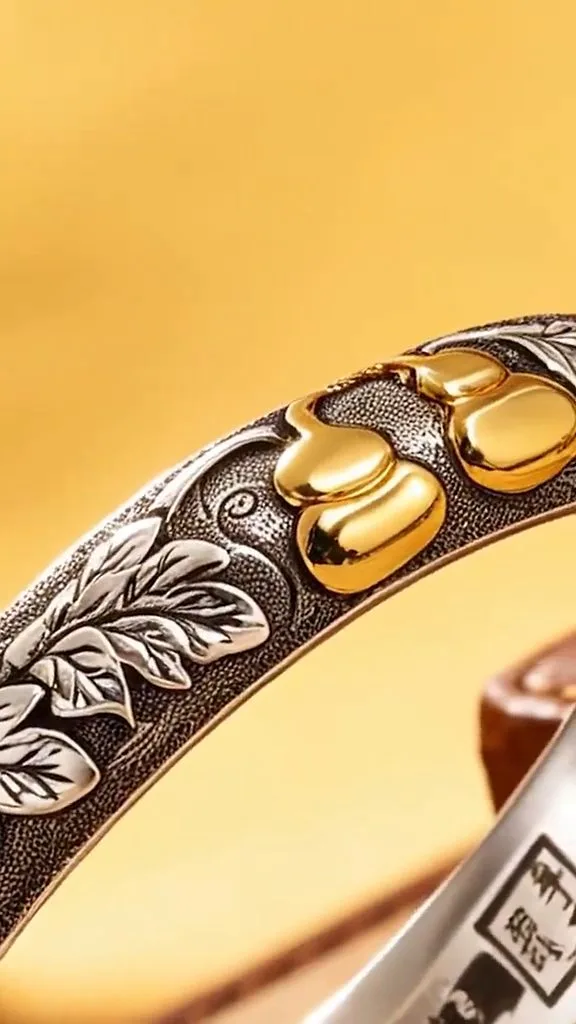
    Gourd bracelet with 999 stamp — protective lacquer applied before export
    Gourd bracelet, finished — protective lacquer applied before export slows tarnish significantly.

    Cleaning Methods Compared

    MethodBest ForCaution
    Silver polishing clothLight tarnish, routine careDon’t use on oxidized/antique finishes
    Mild soap + waterEveryday grimeDry thoroughly; never soak porous stones
    Baking soda pasteModerate tarnish on plain piecesMildly abrasive — avoid mirror finishes
    Professional polishingHeavy tarnish, intricate piecesRemoves a whisper of metal each time
    Chemical dipsFast resultsHarsh; can damage patina and some stones

    For brands: include a polishing cloth with the product. It costs little and prevents the most common customer complaint about silver.

    First-Hand Evidence: What Factories Do About Tarnish

    In our finishing room, tarnish prevention starts before the piece leaves the bench. After final polish, pieces intended for export are lacquered with a jeweler’s protective coating or, for high-wear items like rings, rhodium-plated over the sterling base. Each method has a trade-off: lacquer is invisible and cheap but wears through on high-contact areas within a year or two of daily wear; rhodium is harder and brighter but adds a plating step and changes the metal’s tone slightly toward white.

    We also pack with intent: finished pieces go into sealed bags with anti-tarnish paper before boxing, because a container ship’s humid hold will tarnish unprotected silver in transit. If your supplier ships bare pieces in open trays, that is a quality signal — ask what happens between polishing and packing.

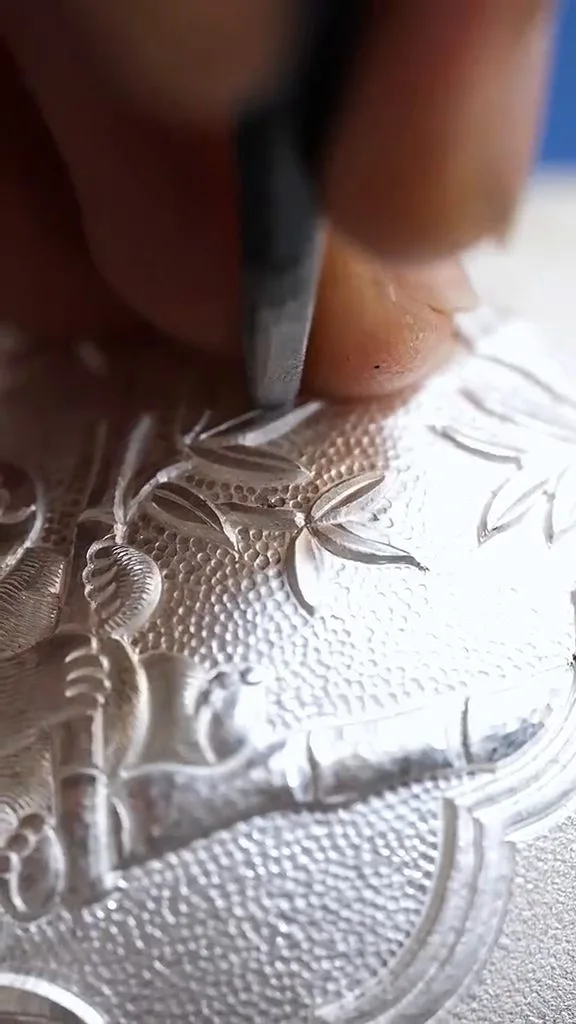
    Bamboo chasing detail — proper care keeps hand-chased patterns lustrous for years
    Bamboo chasing detail — with proper care, hand-chased patterns stay lustrous for years.

    FAQ

    Does tarnish mean the silver is fake?
    No. Genuine sterling tarnishes; stainless steel and plated base metal often don’t. Tarnish is actually mild evidence of real silver content.

    How often should I polish silver jewelry?
    Only when you see yellowing or darkening — over-polishing wears the surface. With proper storage, a regularly worn piece may need polishing just a few times a year.

    Do anti-tarnish strips really work?
    Yes. They absorb sulfur compounds from the enclosed air. Replace them per the manufacturer’s schedule — a saturated strip stops protecting.

    Can tarnish be prevented permanently?
    No coating lasts forever on worn jewelry. Rhodium plating and lacquer buy significant time — years in low-contact areas — but friction eventually wears through. Plan for re-application on heirloom pieces.

    What should brands tell customers about tarnish?
    Be upfront: include a short care card explaining that tarnish is normal, reversible, and preventable. Customers who understand this complain less and trust the brand more.

  • How Is Silver Jewelry Made? Inside a Handmade Workshop

    Silver jewelry is made by forming metal (forging or fabrication), decorating surfaces by chasing or engraving, and polishing to final luster. In a handmade workshop, every step happens at the bench — no two pieces are identical under a magnifying glass, which is precisely the point.

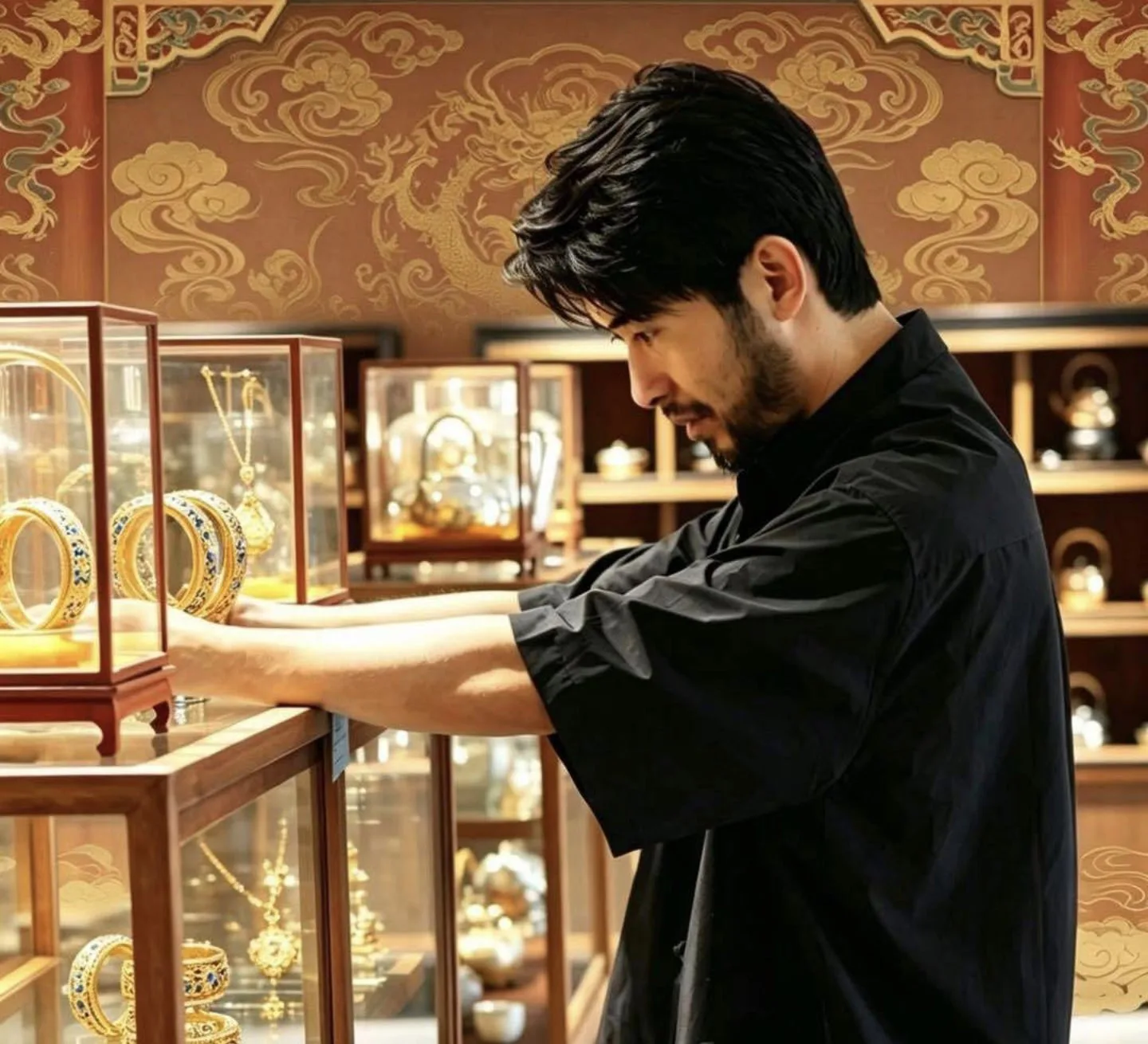
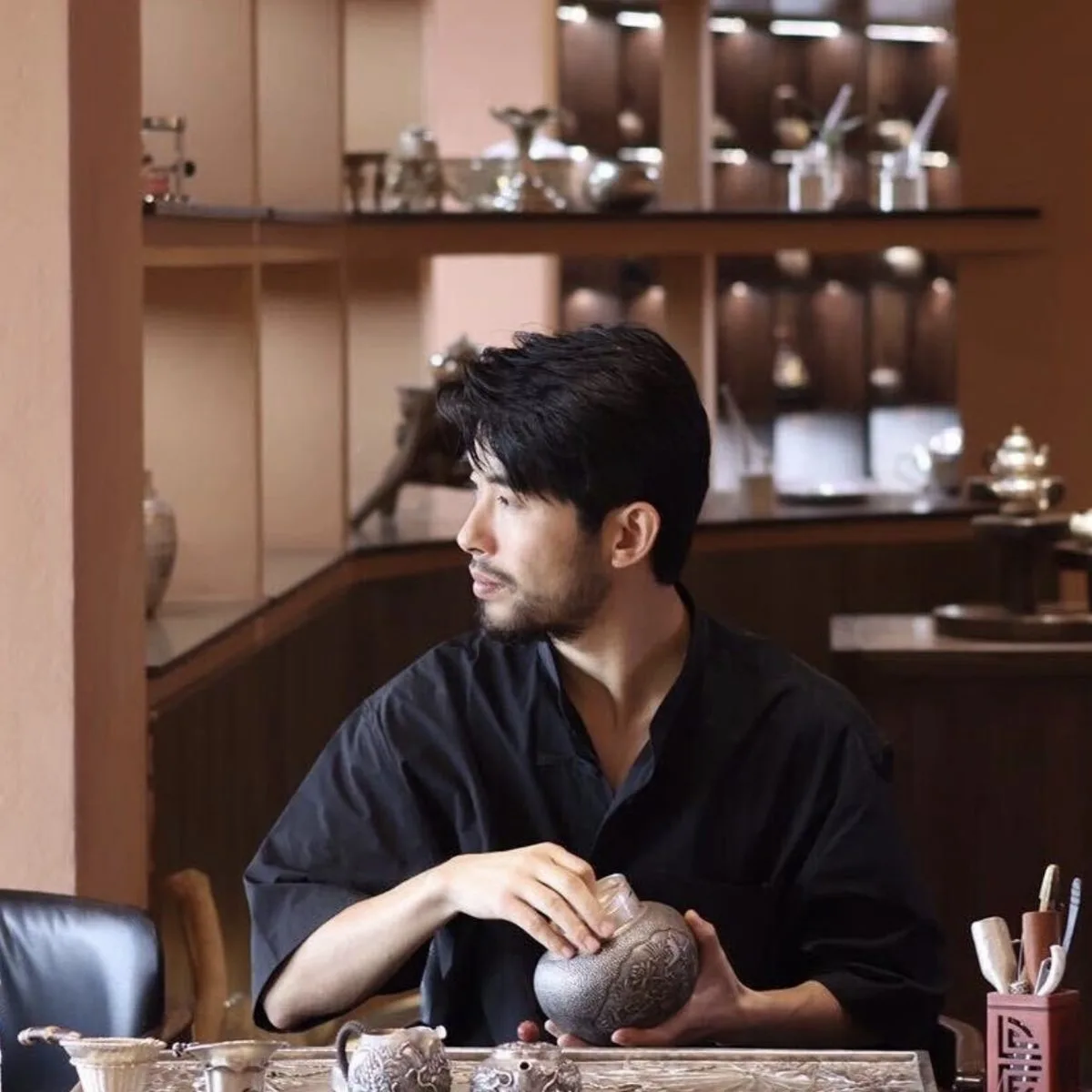
    Shibo Jiang in the showroom — every step from design to finished piece happens in his workshop
    Shibo Jiang in the showroom — from design to finished piece, every step happens in his workshop.

    Understanding the process helps buyers judge quality, set realistic timelines, and communicate clearly with manufacturers.

    At Yunsilver, every step below serves one material: 999 fine silver. Our 999 handmade fine silver is crafted entirely by hand, from forging to chasing to final polish.

    Step 1: Design and Layout

    Everything starts on paper or in CAD. For handmade production, the design is translated into physical templates — the silversmith works out how a flat sheet becomes a three-dimensional form, where seams will fall, and how moving parts will articulate. This planning determines material usage and, ultimately, cost.

    Step 2: Forming the Metal

    Hand-forging is the heart of the process: the silversmith hammers annealed silver sheet or wire into shape over stakes and mandrels. Forging compresses the metal’s grain structure, making it denser and stronger than cast metal. This is the heart of traditional workshops.

    Chasing tool at work — chasing displaces metal without removing any
    The chasing tool at work — chasing displaces metal to create relief, removing nothing.

    Step 3: Annealing and Pickling

    Silver work-hardens as it is hammered — it becomes brittle and will crack if pushed further. The remedy is annealing: heating the piece to a dull red and letting it cool, which relaxes the crystal structure. After annealing, the surface carries dark fire-scale (copper oxide), which is removed in a warm acid pickle bath. A hand-forged piece may go through this anneal-and-pickle cycle a dozen times before it reaches final form.

    Step 4: Decoration — The Dali Chasing Tradition

    This is where regional craft identity lives. In Dali, Yunnan — a silversmithing center with centuries of history — the signature technique is chasing (錾刻, zànkè): the artisan works from the front of the piece with dozens of shaped punches, tapping each with a hammer to raise floral scrolls, geometric borders, and figurative scenes in low relief.

    Unlike engraving, which cuts metal away, chasing displaces it — nothing is removed, so the piece keeps its full weight and strength. A complex chased bangle can carry hundreds of individual punch marks, each placed by eye. Our workshop films show this directly: the rhythm of hammer taps, the slow emergence of a peony from flat sheet. It cannot be rushed, and it cannot be faked by stamping — stamped copies have uniform depth and sharp, mechanical edges that a trained eye spots immediately.

    Step 5: Setting, Polishing, Finishing

    Stones are set, hinges and clasps fitted and tested for smooth action. Polishing proceeds through stages — from coarse abrasive to fine compounds — until the surface reaches a mirror or the desired matte texture. Final inspection checks every setting and moving part before the piece is hallmarked.

    Dragon bracelet finished — from silver grain to finished piece, entirely by hand
    Dragon bracelet, finished — from silver grain to finished piece, entirely by hand.

    FAQ

    How long does it take to make a handmade silver piece?
    It depends on complexity. A simple forged band may take a skilled smith under an hour of bench time; a deeply chased cuff can take days. Production timelines also include sampling, finishing batches, and QC — ask your factory for a schedule per design, not a single number.

    What is the difference between chasing and engraving?
    Chasing displaces metal with punches to create relief; engraving cuts lines into the surface with a graver. Chasing keeps the metal’s full weight; engraving removes a small amount. Both are hand skills with distinct visual signatures.

    Why does handmade silver cost more than cast?
    Bench time. Every anneal-pickle-forge cycle, every chased motif is manual labor by a trained artisan. You are paying for hours, not just metal.

    How can I tell handmade from stamped?
    Look at the decoration under magnification: hand-chased work shows slight variation in punch depth and spacing; stamped work is perfectly uniform. Hand-forged surfaces also show subtle undulations that catch light differently across the piece.

  • 925 Sterling Silver vs 999 Fine Silver: Which Is Right for You?

    The short answer: 925 sterling silver (92.5% silver) is the international standard for mass-produced jewelry — durable, affordable, and easy to verify. But 999 fine silver (99.9% pure), worked entirely by hand, is a different craft altogether: softer metal demanding higher skill, producing pieces with a depth and warmth that casting cannot replicate. The choice is not about which is “better” — it is about what you are making.

    Chisel cutting into silver — every pattern in 999 fine silver is hand-chased
    The chisel meets the silver — every pattern in 999 fine silver is hand-chased, never cast.

    If you source silver jewelry or silverwork, understanding both standards — and when each makes sense — protects you from mislabeled products and helps you match the right material to the right piece.

    What 925 Sterling Silver Is

    925 sterling is an alloy: 92.5% pure silver, 7.5% other metals (usually copper). The copper hardens the alloy, making it durable for mass-produced, daily-wear jewelry — the international standard for volume production.

    What 999 Fine Silver Is — And Why It Demands Handwork

    999 fine silver is 99.9% pure. It is softer, warmer in tone, and — crucially — cannot be treated like 925. Machine stamping and high-speed casting lines are built for harder alloys; 999 requires the silversmith’s hands at every step: hand-forging to work-harden specific areas, careful annealing between stages, and finishing techniques that respect the metal’s softness rather than fighting it.

    This is not a limitation. It is the craft. A hand-forged 999 bangle carries the hammer marks of its making — each strike slightly work-hardens the surface while leaving the interior soft and warm to the touch. The result is a piece with a depth of texture that no casting mold can produce.

    This is Yunsilver’s core specialty. Our Dali workshop produces 999 handmade fine silver as its signature line — not because it is easier, but because the craft tradition of Yunnan silversmithing was built on pure silver, and the market for genuine handmade pieces recognizes the difference.

    Dragon bracelet detail — 999 fine silver hand-chased dragon scales
    Dragon bracelet detail — 999 fine silver, hand-chased scale by scale.

    When to Choose Which

    925 Sterling999 Fine Silver (Handmade)
    Best forDaily-wear jewelry, mass productionArtisan pieces, collectibles, cultural silverwork
    DurabilityHighModerate
    Craft methodCasting, stamping, machine-assistedHand-forging, hand-chasing, repoussé
    PriceLowerHigher
    BuyerFashion brands, volume retailersCollectors, cultural buyers, premium gift market

    The honest guidance: specify 925 for high-wear, high-volume jewelry. Specify 999 handmade when the piece itself is the statement — where the buyer’s hand will feel the difference that only handwork in pure silver can produce.

    First-Hand Evidence: How We Work 999

    In our workshop, 999 silver arrives as grain and leaves as finished pieces without ever touching a casting machine. The critical skill is knowing where to work-harden and where to leave soft: a bangle’s outer surface gets hundreds of hammer strikes for strength and texture, while the inner surface stays smooth against the skin.

    Verification is straightforward but strict. Finished 999 pieces are tested with XRF (X-ray fluorescence), which reads elemental composition without damage. We stamp “999” only after the piece passes.

    One thing buyers should know: genuine handmade 999 carries subtle irregularities — slight asymmetry in hand-chased patterns, faint hammer texture under the polish. These are not defects. They are the signature of the hand, and they are exactly what distinguishes our pieces from machine-made “999” claims that deserve skepticism.

    Hallmarks and What They Mean

    Genuine 999 carries a “999” or “足银” stamp. Genuine 925 carries “925” or “STERLING.” In both cases, the absence of any mark on a piece sold under that standard is a red flag.

    For 999 specifically, ask an additional question: was this handmade or cast? A cast “999” piece is technically fine silver but misses the entire point — the value of 999 is in the handwork it requires and the texture only hands can produce. If a supplier cannot show you the workshop or explain their hand process, the 999 claim deserves scrutiny regardless of what the stamp says.

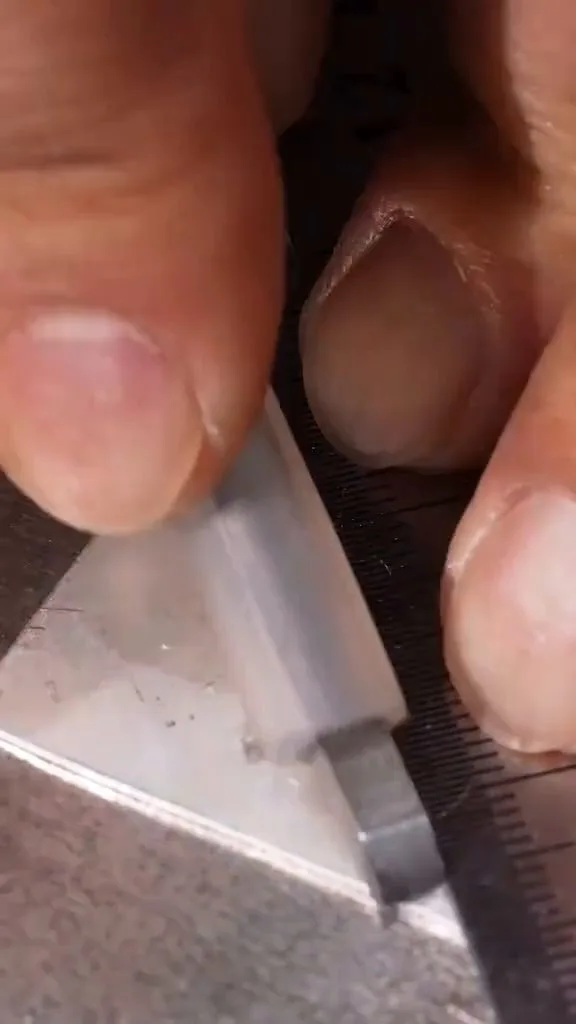
    Measuring silver for cutting — every 999 piece starts from the silversmith's hands
    Measuring for the cut — every 999 piece starts from the silversmith’s hands.

    FAQ

    Is 999 fine silver real silver?
    Yes — 99.9% pure, the highest practical purity for crafted silverwork and jewelry. It is softer than 925, which is why it demands handwork.

    Does 999 tarnish faster than 925?
    Actually, 999 tarnishes more slowly — tarnish comes primarily from copper reacting with sulfur compounds, and 999 has almost no copper. Another quiet advantage of fine silver.

    Can 999 jewelry be worn daily?
    Depends on the piece. Bangles, pendants, and earrings in 999 are fine for regular wear. Rings with thin bands or pieces with mechanical clasps are better in 925 — daily stress points need the harder alloy.

    How do I verify a supplier’s 999 handmade claim?
    Three checks: (1) XRF test reports on finished pieces; (2) ask to see the workshop — hand-forging leaves evidence (hammers, anvils, chasing tools) that a casting-only shop cannot fake; (3) look for the subtle irregularities of handwork in the finished piece. Machine-perfect “handmade” is a contradiction.

    Why does handmade 999 cost more?
    Labor. A single hand-chased bangle can take a skilled silversmith days. You are paying for the hand, the eye, and the years of training behind them — not just the metal.

  • OEM vs ODM Jewelry: What’s the Difference?

    The short answer: with OEM (Original Equipment Manufacturing), you supply the design and the factory produces it to your specification; with ODM (Original Design Manufacturing), the factory supplies the design and you sell it under your brand. The difference comes down to who owns the design work — and it shapes everything from development cost to intellectual property.

    Shibo Jiang, Founder of Yunsilver
    Shibo Jiang, Founder of Yunsilver — bridging brand vision and workshop craft in Dali, Yunnan.

    If you are a jewelry brand sourcing production overseas, choosing the wrong model wastes months. This guide explains how each model works in silver jewelry, when to pick which, and what to ask a factory before you commit.

    At Yunsilver, both OEM and ODM projects center on 999 fine silver: our 999 handmade fine silver is the core of everything we make, and every order—whether you supply the design or we do—starts from that standard.

    What OEM Means in Jewelry

    OEM is a build-to-print relationship. You bring a finished design — technical drawings, CAD files, or a physical sample — and the manufacturer executes it. The factory’s job is fidelity: matching your dimensions, alloy, finish, and tolerances piece after piece.

    OEM suits brands with an in-house design team or a signature aesthetic that must not drift. You keep full ownership of the design, and the factory typically agrees not to produce it for anyone else. The trade-off is that you carry the design cost and the responsibility for getting the details right before tooling begins.

    What ODM Means in Jewelry

    ODM flips the responsibility. The factory offers its own design library — developed from its craft knowledge and market experience — and you select, adapt, and brand the pieces. Many silver factories in traditional craft regions maintain deep archives of regional motifs and techniques that a brand could never develop alone.

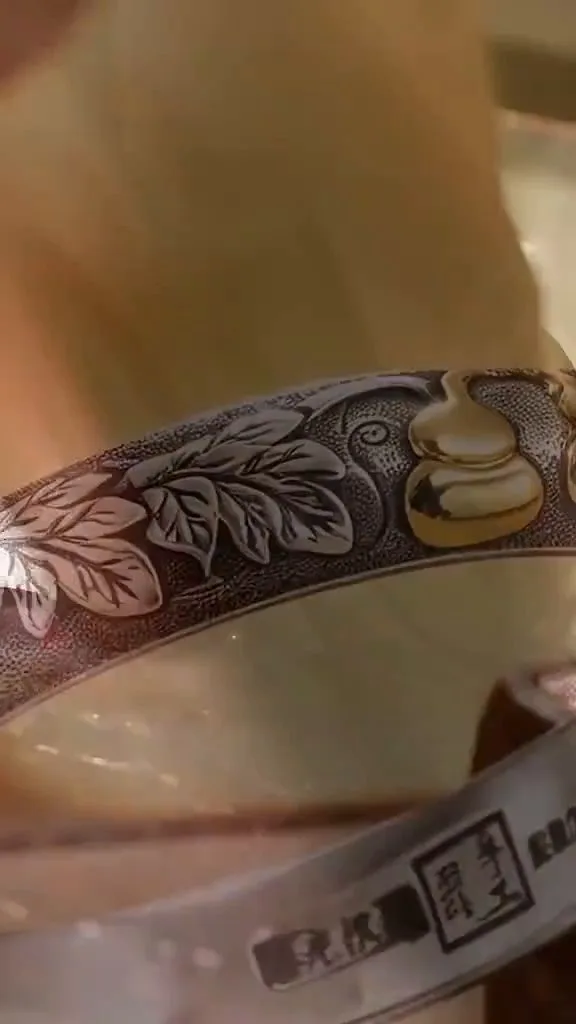
    Close-up of hand-chased floral and gourd motifs on silver bangle showcasing Yunnan ODM jewelry design craftsmanship
    Hand-chased floral motifs — an example of the Yunnan design archive behind our ODM offerings.

    ODM suits brands that need speed or lack design capacity. Development is faster because the factory has already solved the engineering: it knows how a particular clasp behaves, which thickness survives daily wear, where a stone setting needs reinforcement. The trade-off is less exclusivity — a popular ODM design may appear, with variations, in other brands’ lines unless you negotiate exclusivity or request meaningful modifications.

    Side-by-Side Comparison

    OEMODM
    Who designsYou (the brand)The factory
    Development speedSlower — design, then engineeringFaster — proven designs adapted
    Design ownershipYours, typically exclusiveShared or licensed; negotiate exclusivity
    Best forSignature collections, strong design teamsNew brands, fast market testing
    Customization depthTotal — every dimension is yoursModerate — adapt existing designs
    Main riskDesign errors become your costLess differentiation without modifications

    First-Hand Evidence: How a Craft Factory Handles Both

    In our Dali workshop, the two models often blend. An OEM client may send a CAD file for a bangle, and our silversmiths will flag what the drawing cannot show — for example, that a 1.2 mm wall will dent under a hammered finish, or that a hinge needs a slightly wider knuckle to survive daily opening. That feedback loop, between the client’s design intent and the bench worker’s hands, is where OEM succeeds or fails.

    On the ODM side, our archive of Yunnan chasing patterns — floral scrolls, geometric borders developed over generations — gives brands a starting point they can adapt. A common path: a brand selects an ODM bracelet, requests a different width and a custom clasp, and the piece becomes effectively exclusive through modification. The factory’s role shifts from executor to collaborator.

    What to Ask Before You Choose

    Whether you go OEM or ODM, ask the factory three questions. First, who owns the design files and samples after the project — get it in writing. Second, how are modifications priced: is there a separate sampling fee per round, or is it folded into the order? Third, what is the factory’s actual craft capability versus its assembly capability — a factory that only assembles cast components will struggle with an OEM design that requires hand-forging or chasing.

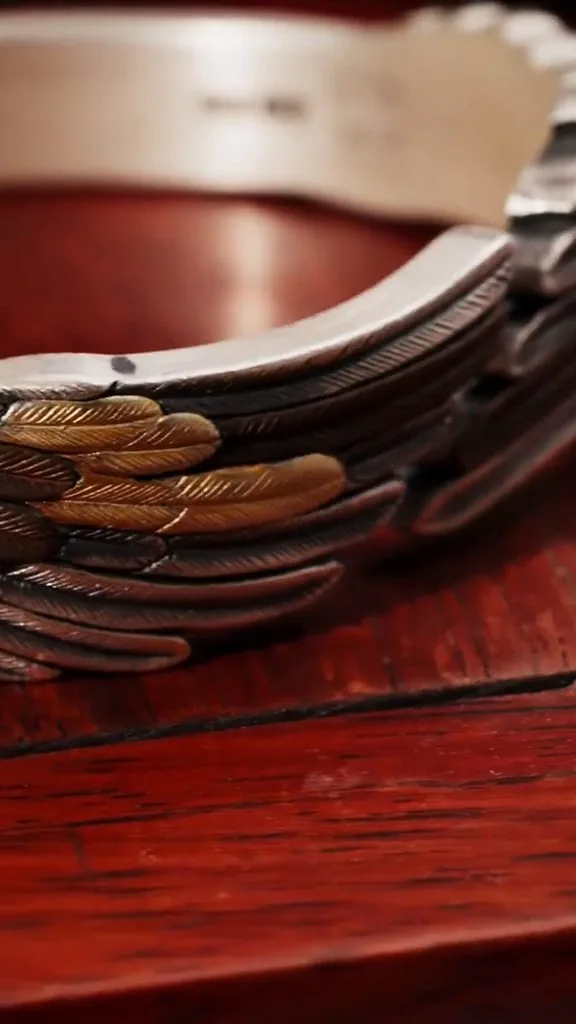
    Finished feather-pattern silver bangle close-up demonstrating OEM ODM jewelry manufacturing quality
    A finished feather-pattern bangle — a serious manufacturer answers your three questions precisely.

    A serious manufacturer answers these precisely. Vague answers are a signal to keep looking.

    FAQ

    Can I switch from ODM to OEM with the same factory?
    Yes, and it is a common progression. Brands often start with ODM to test the market, then move successful pieces into OEM-style exclusive development once volume justifies it.

    Does ODM mean lower quality?
    No. Quality depends on the factory’s process control, not the business model. An ODM piece from a skilled workshop outperforms a poorly managed OEM piece every time.

    Who owns the design in an ODM arrangement?
    It depends on the agreement. Default practice varies by factory, so negotiate ownership or exclusivity before sampling — not after.

    How many sampling rounds are normal?
    For OEM, two to three rounds is typical: first sample, correction, approval. Complex pieces with moving parts may need more. Ask how the factory charges per round.

    Can a factory do both OEM and ODM?
    The best ones do. A workshop with genuine craft depth can execute your design faithfully and also offer a design archive worth adapting.