The most effective tarnish prevention is simple: keep silver dry, store it sealed with anti-tarnish strips, and wear it regularly — body oils actually slow tarnish. Tarnish is a surface chemical reaction, not damage, and every method below works by limiting the silver’s exposure to sulfur compounds in air, sweat, and water.
Whether you are a brand advising customers or a buyer evaluating a supplier’s finishing, these are the practices that work.
Why Silver Tarnishes
Tarnish is silver sulfide — a dark layer that forms when silver reacts with hydrogen sulfide and other sulfur compounds present in air, perspiration, perfume, and even some foods and rubber. The copper in sterling silver accelerates the reaction slightly, which is why 925 tarnishes faster than 999.
Key point: tarnish is microns thin and entirely reversible. It is not corrosion eating into the metal. Any “permanent tarnish damage” claim is a myth — though deep neglect can require professional re-polishing.
Prevention Methods That Work
Wear it often. This surprises people, but regular wear is genuinely protective. Skin oils form a thin barrier, and the gentle friction of daily use burnishes the surface. Silver left unworn in a drawer tarnishes faster than silver worn daily.
Store it sealed and dry. Airtight zip bags with an anti-tarnish strip (activated carbon or silver cloth) are the gold standard for storage. Keep pieces separated so they don’t scratch each other. Avoid bathrooms — humidity accelerates everything.
Keep chemicals away. Perfume, hairspray, sunscreen, and household cleaners all attack silver. Put jewelry on last when dressing, take it off before swimming — chlorinated pools are especially harsh — and never wear silver while cleaning with bleach or sulfur-based products.
Choose good finishing. At the manufacturing stage, protective lacquers or rhodium plating dramatically slow tarnish. Ask your supplier what anti-tarnish finishing they offer; it is one of the clearest quality differentiators between factories.
Cleaning Methods Compared
| Method | Best For | Caution |
|---|---|---|
| Silver polishing cloth | Light tarnish, routine care | Don’t use on oxidized/antique finishes |
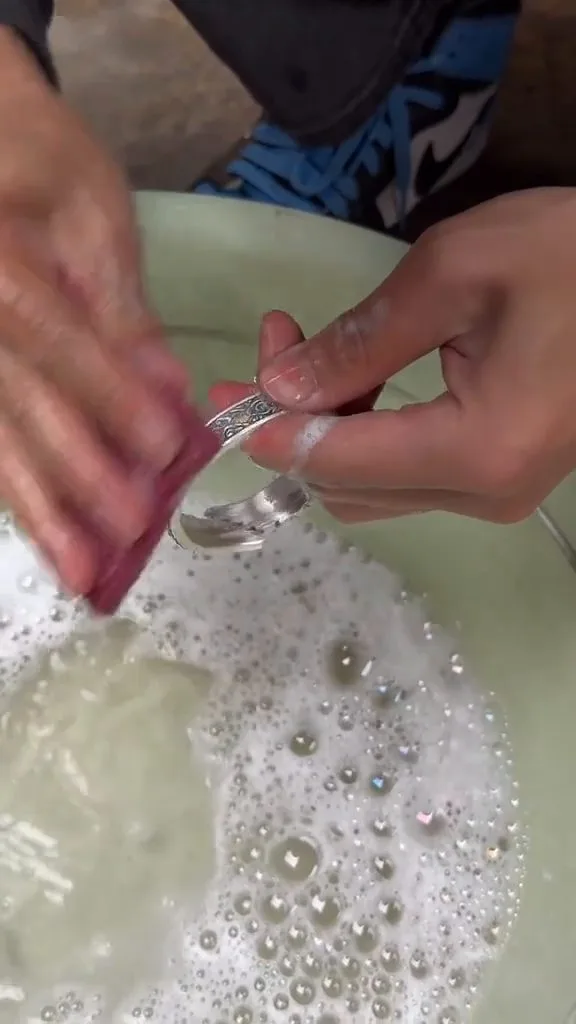
| Mild soap + water | Everyday grime | Dry thoroughly; never soak porous stones |
| Baking soda paste | Moderate tarnish on plain pieces | Mildly abrasive — avoid mirror finishes |
| Professional polishing | Heavy tarnish, intricate pieces | Removes a whisper of metal each time |
| Chemical dips | Fast results | Harsh; can damage patina and some stones |
For brands: include a polishing cloth with the product. It costs little and prevents the most common customer complaint about silver.
First-Hand Evidence: What Factories Do About Tarnish
In our finishing room, tarnish prevention starts before the piece leaves the bench. After final polish, pieces intended for export are lacquered with a jeweler’s protective coating or, for high-wear items like rings, rhodium-plated over the sterling base. Each method has a trade-off: lacquer is invisible and cheap but wears through on high-contact areas within a year or two of daily wear; rhodium is harder and brighter but adds a plating step and changes the metal’s tone slightly toward white.
We also pack with intent: finished pieces go into sealed bags with anti-tarnish paper before boxing, because a container ship’s humid hold will tarnish unprotected silver in transit. If your supplier ships bare pieces in open trays, that is a quality signal — ask what happens between polishing and packing.
FAQ
Does tarnish mean the silver is fake?
No. Genuine sterling tarnishes; stainless steel and plated base metal often don’t. Tarnish is actually mild evidence of real silver content.
How often should I polish silver jewelry?
Only when you see yellowing or darkening — over-polishing wears the surface. With proper storage, a regularly worn piece may need polishing just a few times a year.
Do anti-tarnish strips really work?
Yes. They absorb sulfur compounds from the enclosed air. Replace them per the manufacturer’s schedule — a saturated strip stops protecting.
Can tarnish be prevented permanently?
No coating lasts forever on worn jewelry. Rhodium plating and lacquer buy significant time — years in low-contact areas — but friction eventually wears through. Plan for re-application on heirloom pieces.
What should brands tell customers about tarnish?
Be upfront: include a short care card explaining that tarnish is normal, reversible, and preventable. Customers who understand this complain less and trust the brand more.
Leave a Reply