White: Our Favorite Color
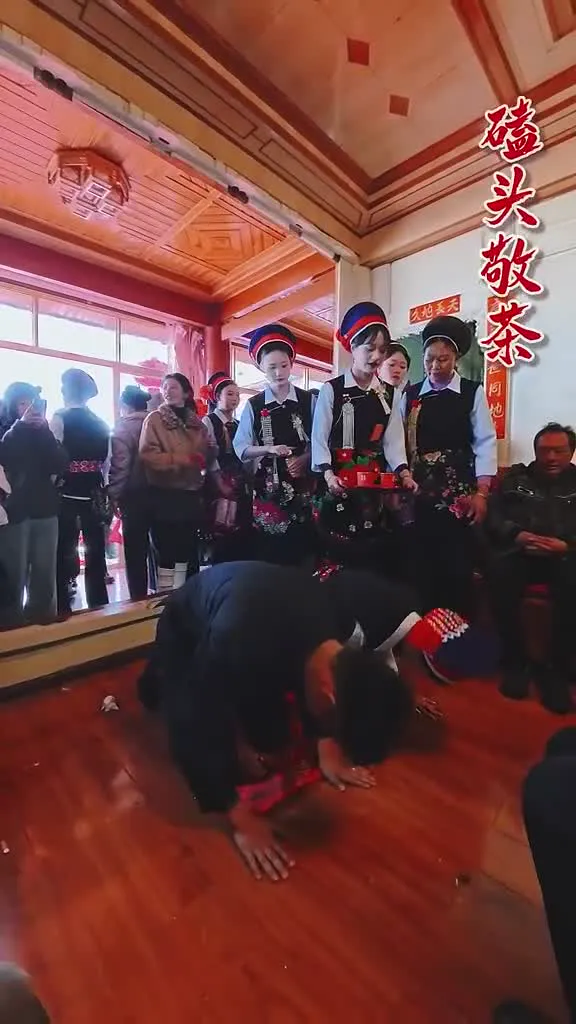
We Bai people love white most of all.
“Bai” (white) in our language means nobility, purity, and cleanliness. We call ourselves “Baihuo,” which means “white people.”
Bai girls wear white blouses, Bai young men wear white shirts, and Bai houses have white walls. White is the base color of our ethnic group.
Every time I see a Bai girl in a white blouse and red vest walking through the village, my heart feels especially at ease. That cleanliness, that freshness, is beyond compare with any other color.
Men’s Clothing: The Elegance of “Three Drops of Water”
Men in the Dali region mostly wear white Mandarin-collar shirts, with black-collar jackets on top, or several leather or silk jackets, commonly known as “three drops of water.”
They wear leather belts or embroidered belly bands at the waist, and blue or black trousers below. Every adult man carries an embroidered pouch at his side, embroidered with patterns like “two sparrows on a branch” or “mandarin ducks playing in water.”
The pouch is embroidered by a girl for her sweetheart. How well a man’s pouch is embroidered reflects on the reputation of the girl who embroidered it. So when Bai girls embroider pouches, they put in their utmost care.
Women’s Clothing: Red and White, the Classic Combination
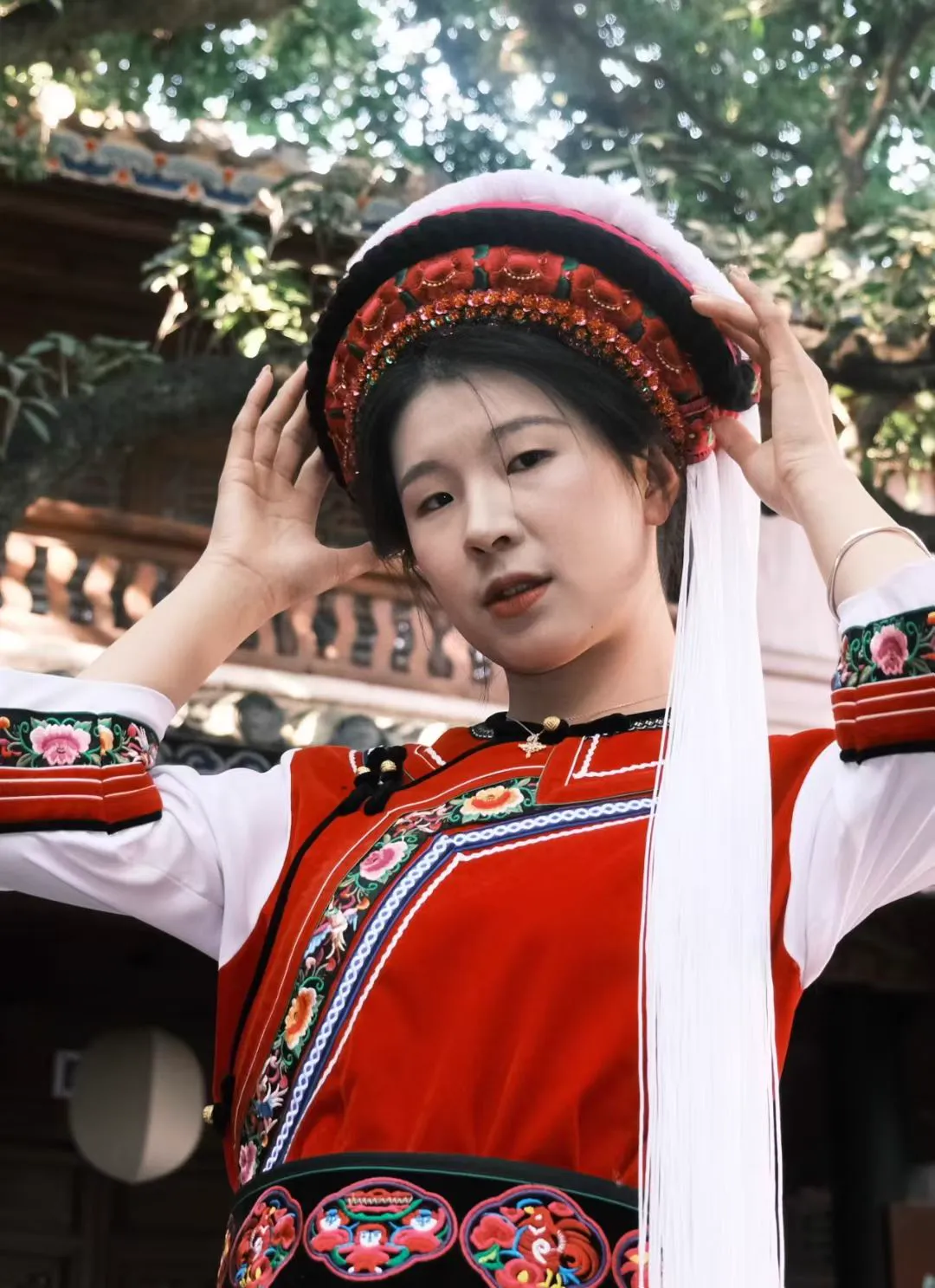
Women in the Dali region mostly wear white blouses with red vests, or light blue blouses, with black velvet collar jackets on top, embroidered short aprons at the waist, blue wide-leg trousers below, and embroidered “hundred-section shoes” on their feet.
The red-and-white combination is the most classic in Bai clothing. White represents nobility and purity, red represents festivity and good fortune, blue represents Erhai Lake, and black represents steadiness.
When a Bai girl wears red-and-white clothing and stands between Cangshan Mountain and Erhai Lake, the scene is as beautiful as a painting.
The Wind-Flower-Snow-Moon Headdress: Wearing Dali on Your Head
The headdress of Bai women is called “Wind, Flower, Snow, Moon,” symbolizing the snow of Cangshan, the moon of Erhai, and floral patterns.
The headdress consists of an embroidered headscarf, a white velvet cap, and colorful silk threads. It is the most representative part of Bai clothing.
The four characters “Wind, Flower, Snow, Moon” are both the scenery of Dali and the scenery on a Bai girl’s head. The wind of Xiaguan, the flowers of Shangguan, the snow of Cangshan, and the moon of Erhai are all worn on her head.
Every time I see a Bai girl wearing the “Wind, Flower, Snow, Moon” headdress, I think: this is not just a headdress—she is wearing the whole of Dali on her head.
Embroidery: A Girl’s Heart
Bai women are skilled at embroidery, with exquisite stitching on pouches, aprons, shoe uppers, and headscarves.
Embroidery patterns are mostly auspicious motifs like peonies, phoenixes, butterflies, and auspicious clouds. An embroidered pouch is the crystallization of a Bai girl’s wisdom and skill.
A girl’s embroidery skill is often proof of her dexterity and cleverness. How well a pouch is embroidered reflects on the girl’s reputation. So Bai girls learn embroidery from childhood, stitching their hearts into every needle and thread.
Silver Jewelry: The Finishing Touch of Festival Dress
For festival dress, Bai women wear silver earrings, silver bracelets, silver neck rings, and other silver jewelry.
Silver jewelry is both decoration and a symbol of wealth, as well as an important part of a dowry. When a girl marries, she wears a full set of silver jewelry—both the dignity of her family and a blessing for her new life.
After making silver jewelry for so many years, what I love most is seeing Bai girls wearing silver jewelry. The gleaming silver earrings, bracelets, and neck rings, paired with red-and-white clothing—that beauty is beyond compare with any jewelry. Because it carries culture, heritage, and love.
Living Clothing: Still Worn, Still Embroidered
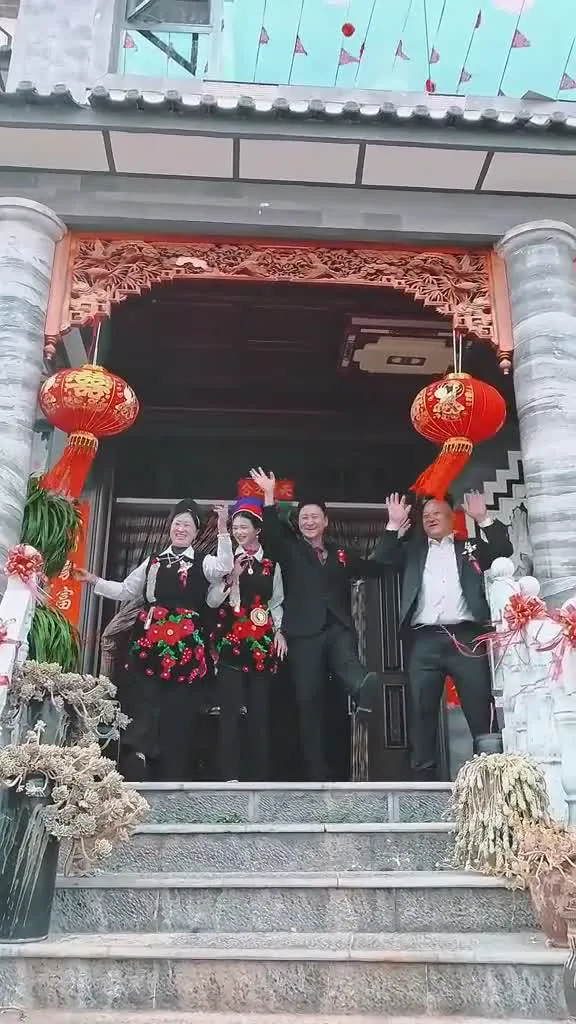
Bai clothing is still widely worn at festivals, weddings, song gatherings, and other occasions. It is a living expression of ethnic culture.
In Xizhou, Zhoucheng, and other places, there are Bai clothing makers and displays. Visitors to Dali can rent a Bai outfit for photos or buy an embroidered apron to take home.
The clothing has not entered a museum. It is still worn by Bai girls, walking between Cangshan Mountain and Erhai Lake. As long as Bai girls still wear it, Bai clothing is still alive.
I am Mr. Jiang, founder of Yunsilver. My home is in Dali. The silver jewelry I make tells the stories of the Bai people. Website: yunsilver.com
Leave a Reply